






- The all-new 2024 Chevy Trax takes the podium with 3rd place
The all-new Chevrolet Blazer EV topped a field of 40 competitors to win MotorTrend’s prestigious “Golden Calipers” for 2024 SUV of the Year. MotorTrend credits the Blazer EV’s cutting-edge technology, dynamic design and unprecedented powertrain choices as the reasons for their selection. The Blazer EV continues Chevy’s legacy of delivering innovative electric vehicles for its customers, first seen by MotorTrend’s 2017 Car of the Year winner, the Chevrolet Bolt EV.
“Chevrolet has truly nailed the design and functionality with the Blazer EV, which looks and operates just as an industry-leading all-electric SUV should,” said Ed Loh, MotorTrend Group head of editorial. “The Chevy Blazer EV offers an effortless driving experience, seamlessly integrates into your lifestyle and boasts user friendliness that’s hard to match.”
The title “SUV of the Year” is one MotorTrend has reserved for only vehicles with the utmost product excellence in the past 25 years. Evaluated on six key criteria, including safety, advancement in design and performance of intended function, the Blazer EV’s reputation as the full package rang true to MotorTrend’s panel of discerning judges.
“We are excited and honored to receive this recognition for the Blazer EV,” said Scott Bell, vice president, Chevrolet. “This vehicle takes convenience and customer choice to the next level, a major step in delivering on Chevrolet’s promise to provide an EV for everyone.”
Available in multiple trims LT, RS and Chevy’s first-ever electric SS, the Blazer EV boasts a 17.7-inch-diagonal customizable infotainment touchscreen, available front-, rear- and all-wheel drive configurations and was recently certified by the EPA at 324 miles on a full charge (RWD).
Customers interested in purchasing a Blazer EV should contact their local Chevy EV dealer.Chevrolet’s initial launch edition, the Blazer EV RS AWD, is currently available, priced at $60,215. This price excludes applicable federal tax credits. Pricing for the remaining Blazer EV trims and drivetrains, including FWD variants of the RS and LT, will be announced closer to their launch dates in 2024. Customer orders for other trims will be accepted closer to their launch dates, as well.
- The new autonomous vehicle service will begin in early 2026
- The Origin vehicle — developed by GM, Cruise and Honda — will be made in the U.S.
We’re marching toward a future with zero crashes, zero emissions and zero congestion. But this future is only possible if we take big, bold leaps outside of traditional transportation. That’s why we’re committed to safely deploying autonomous vehicles on a global scale. And why in 2016 we invested in Cruise, the San Francisco-based company leading the way when it comes to electric autonomous vehicles.
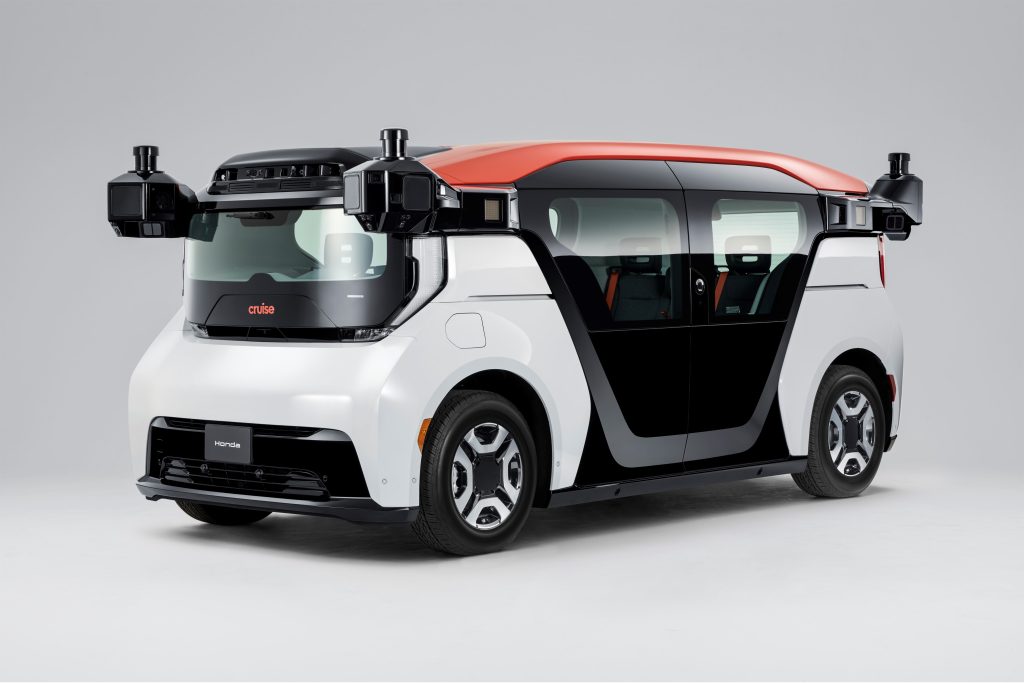
Today we’ve reached another milestone in our journey to bring autonomy to the world. Alongside Cruise and Honda we have announced a memorandum of understanding to establish a new joint venture (JV) company to launch a driverless ridehail service in Japan starting in early 2026.
“GM has always been invested in defining the future of transportation and that’s more true today than ever,” said GM Chair and CEO Mary Barra. “The benefits of AVs — from safety to accessibility — are too profound to ignore and through this important partnership with Cruise and Honda, we’re bringing forward innovation that leverages our expertise in cutting-edge software and hardware to help more people around the world get where they need to go.”
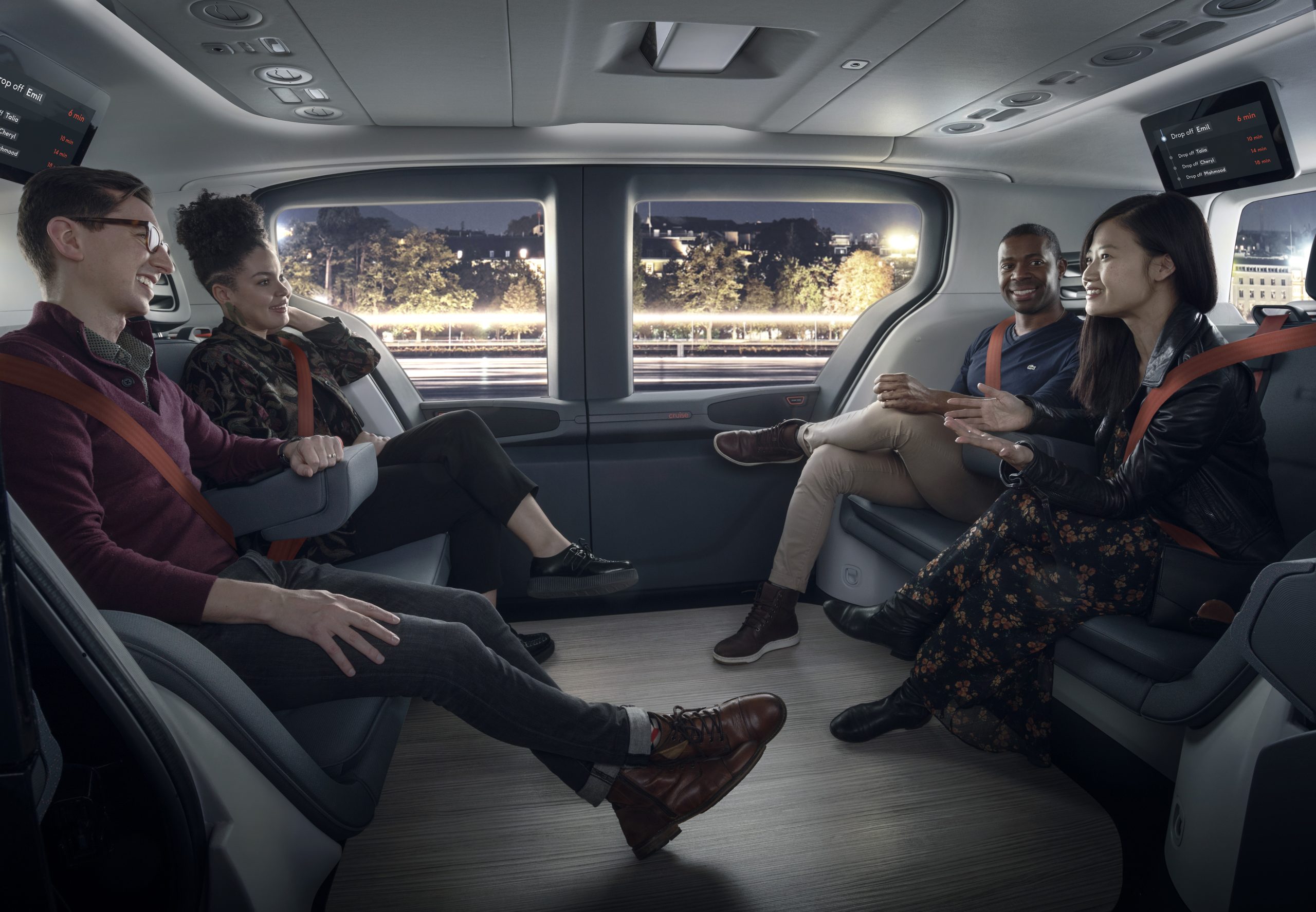
The opportunity for the ridehail service in Japan, which is expected to be the first of its kind, is huge. Japan has the potential to be one of the largest driverless ridehail markets in the world as large cities experience high demand for taxis. The region also has a growing need for new forms of transportation, with ongoing driver shortages and an increasing need for accessible forms of transportation. To address these needs, the JV will leverage the Origin, a people-centric vehicle co-developed by GM, Cruise and Honda specifically for autonomous transportation. The vehicle allows for six passengers to sit face-to-face, enabling customers to comfortably travel in a new way.
“There is an important and growing societal need for safe and accessible transportation in Japan that autonomous vehicles can provide a solution for,” said Cruise CEO Kyle Vogt. “In addition to societal impact, the business opportunity is also exciting, as Japan represents one of the largest potential autonomous vehicle ridehail markets in the world, with many dense, highly populated cities that have high transportation needs.”
In developing the Origin, GM, Cruise and Honda each brought our unique skillsets and talents to the manufacturing, software and development process. GM will manufacture approximately 500 Origins for the launch of this new JV at Factory ZERO Detroit-Hamtramck Assembly in Michigan, the launchpad for GM’s multi-brand EV and AV future.
“Honda is striving to create the ‘joy and freedom of mobility.’ Through our driverless ride service with Cruise and GM, we will enable customers in Japan to experience a new value of mobility, improve the quality of their mobility experiences and offer the joy of mobility,” said Global CEO of Honda Toshihiro Mibe. “This will be a major step toward the realization of an advanced mobility society. Providing this service in central Tokyo where the traffic environment is complex will be a great challenge, however, by working jointly with Cruise and GM, Honda will exert further efforts to make it a reality.”
We believe autonomous vehicles can transform the way people move around the world. We’ve only just begun to see this with Cruise ridehail services in San Francisco, Austin and Phoenix accumulating 5 million driverless miles and over 100,000 five-star rides. We’re excited to work with Cruise as they launch autonomous vehicles in 12 additional announced markets in the U.S. and customers take their first rides and experience the future of transportation.
GM Continues Push for Software Standardization to Give Customers Better Technology, Faster
GM joins COVESA to share uServices with the developer community for a seamless, shared software solution
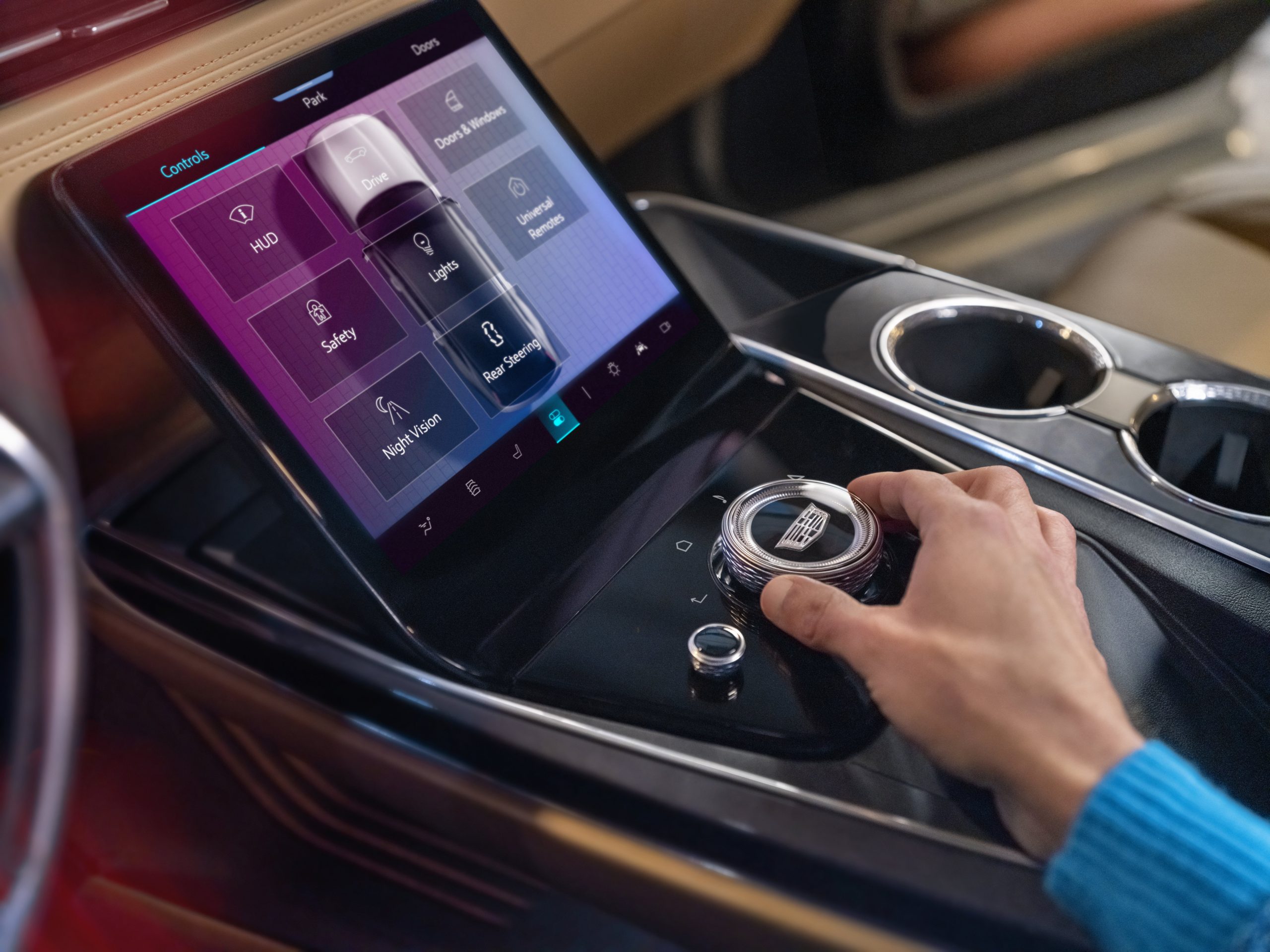
General Motors announced today that it is contributing a vehicle services definition called “uServices” to the automotive software developer community. uServices aims to standardize software interfaces to securely access vehicle systems from anywhere in an OEM’s vehicle ecosystem. This standardized interface and associated programming model enables efficient development of distributed software required by Software Defined Vehicles (SDVs).
GM is contributing uServices by joining the Connected Vehicle Systems Alliance (COVESA), a global, member-driven alliance focused on the development of open standards and technologies that accelerate innovation for connected vehicle systems.
“General Motors intends to play a leading role in unifying a global community of creative developers while reducing the time it takes for the industry, from automotive manufacturers to suppliers, to develop and integrate these features,” said Frank Ghenassia, executive chief architect of Software Defined Vehicles at General Motors. “By sharing existing technologies now in production, GM hopes to accelerate the development of an ecosystem that we can leverage to integrate third-party software at reduced engineering cost. This, in turn, can help lower the cost for customers and reduce time to market while opening the door for customers to gain access to more applications1.”
This complements GM’s recent commitment to SDV standardization. In April, the company announced it would share uProtocol with the Eclipse Foundation, a standard with the potential to connect automotive applications and services everywhere — not just in GM products or in vehicles — but to create efficiency across phones and other devices talking to vehicles as well.
While uProtocol serves as the backbone for more efficient vehicle software development across the industry, uServices is meant to set standards for interfacing with vehicle features and communicating through that backbone, serving as a standard API to abstract vehicle services, enabling a unified connected vehicle ecosystem. COVESA’s community brings extensive experience in the software services space. Introducing uProtocol and uServices across two organizations links strong areas of experience and drives more unified collaboration across a greater population of contributors.
“COVESA is very pleased to have GM as another global OEM actively contributing to our open-source community,” said Steve Crumb, executive director at COVESA. “uServices is a great addition to the growing set of open-source solutions hosted by COVESA and made openly available for enhancement and adoption among a growing number of automotive stakeholders.”
uServices was introduced to COVESA’s Data Expert workgroup during a meeting in July 2023. GM will be contributing uServices to COVESA throughout October 2023, continuing to add to the program as it is developed.
Protein-Packed Fall Trail Mix
As we transition from summer to fall weather and temperatures begin to drop, you might be in the mood for some outdoor adventures. And every outdoor adventure requires a snack for energy! This recipe for protein packed fall trail mix is exactly what you need for your next bike ride, hike, or whatever you like to do!
This Fall Trail Mix Recipe is easy and will have you in the autumn spirit in no time! You’ll need:
-Pecans
-Olive Oil
-Rosemary
-Sea Salt
-Beef Jerky
-Dried Pears
-Dried Cranberries
Get the complete directions for this Fall Trail Mix at Yummly and enjoy your fall snack!

Thanks, Six
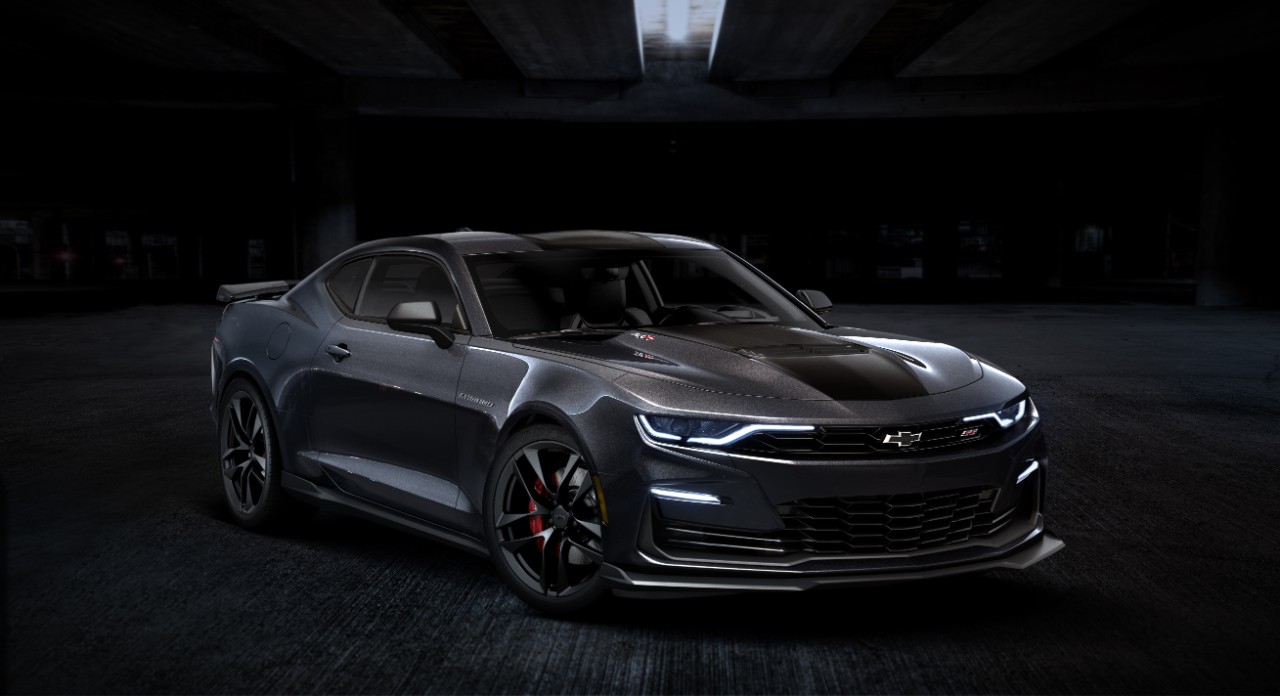
As the sixth-generation Chevy Camaro comes to a close, we look at what inspired its brilliance.
This story originally appeared in the Chevy’s online magazine, New Roads.
In 2012, as development began on the sixth generation of Chevrolet’s Camaro, the team did what any team would do: look to previous generations with an eye toward moving Camaro’s story forward.
The pony car’s fifth generation, which went into production in 2010, had done just that, kickstarting a new era for a storied nameplate that had been paused since production of the fourth gen ended in 2002. And now that the sixth generation is coming to an end, it’s a good time to tally up the accomplishments, and its place in history.
Paying Tribute
“I think we did a really good job on the sixth-generation Camaro, understanding that everything we touched harkened to the past generations as kind of a tribute,” says Al Oppenheiser, Camaro’s chief engineer for the fifth and sixth generations of the car. “We did something that appealed to every Camaro fan in some way or another, be it the special performance packages, a special color, a special trim level, the special editions.”
CAMARO CLASSICS
Six generations after the Chevy Camaro was introduced for the 1967 model year, the Camaro has maintained its DNA as a driver-centric sports car.

GEN 1 CAMARO
The Camaro kicked off its high-performance lineage with the Z28 package.
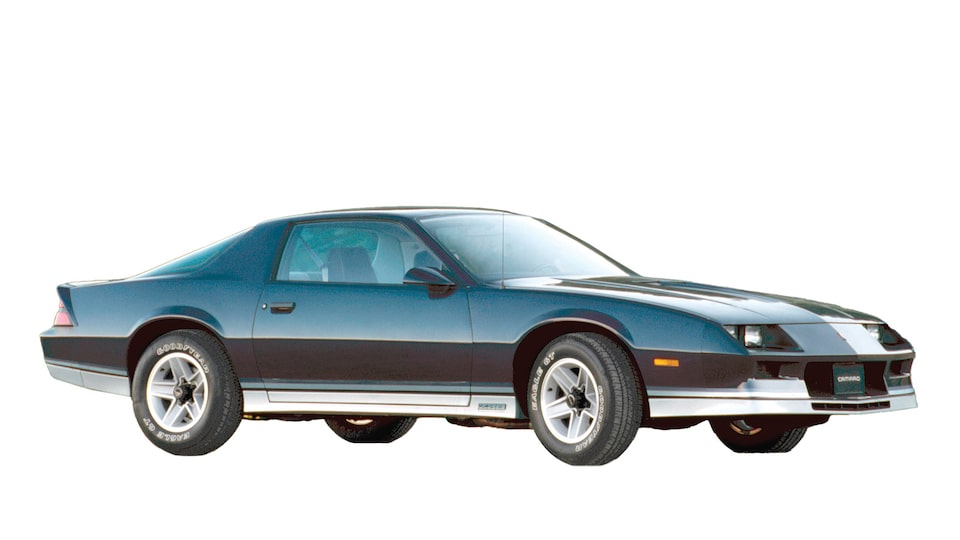
GEN 3 CAMARO
The third-generation Camaro saw the introduction of the 1LE package.
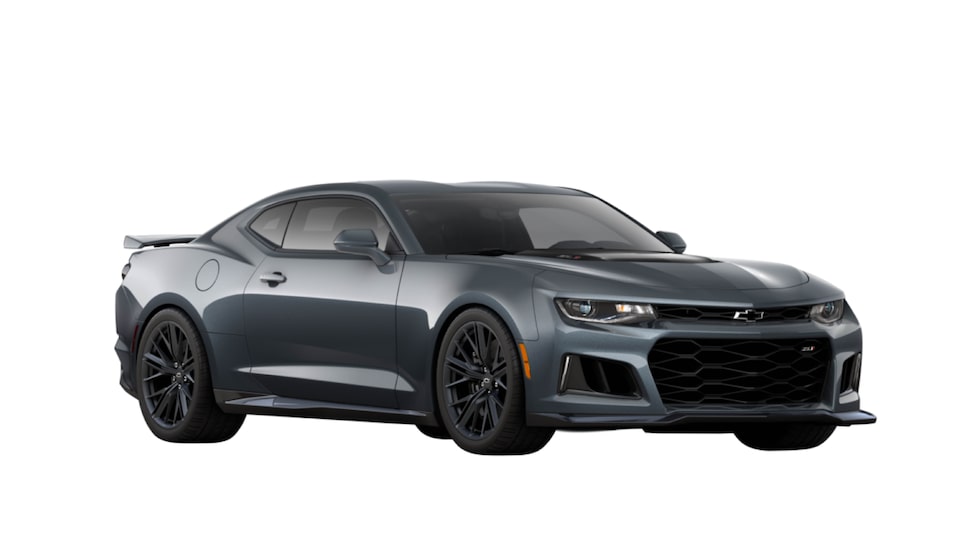
GEN 6 CAMARO
The latest Camaro pushed the envelope with the 1LE package and ZL1 model.
One last special edition — the Collector’s Edition, inspired by the first-gen Camaro and the program’s initial code name, Panther — is on the way, with details to be released early this summer. It will continue the commitment to performance that the sixth generation will be remembered for, a commitment highlighted by more than 60 NASCAR Cup wins since 2018.
Inspiration from the Past
To unlock those performance chops, the Camaro team didn’t go all the way back to the beginning. They began by pulling inspiration from the 1980s, when Chevy’s third-generation pony car was struggling in the Showroom Stock road racing series.
Engineers at the time began developing features that would boost Camaro’s track numbers. In 1989, Chevy introduced the 1LE package option for the Camaro, addressing the brake, fuel, and suspension systems and helping the Camaro find its way to the podium.
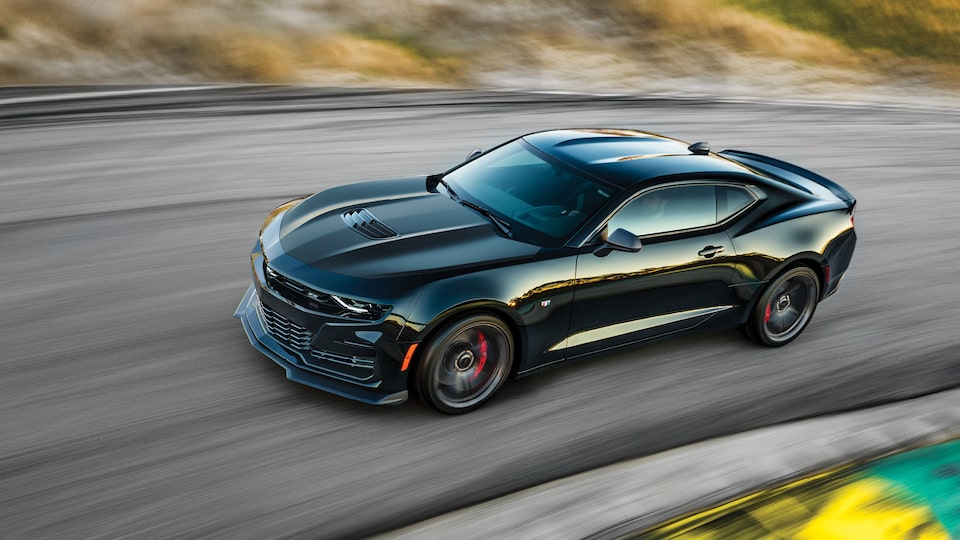
THE CAMARO 1LE SS. The Camaro SS is one of the Camaro models offered with the 1LE package. This performance package adds Brembo® brakes, summer tires, and dual-mode performance exhaust along with a front splitter and rear spoiler.
Since then, the 1LE package has appeared off and on in the lineup, but for the sixth generation, the package’s features were expanded based on how it first appeared in 1989. On top of that, it was offered with every engine option, including a new turbocharged four-cylinder.
With the turbocharged four-cylinder and the 1LE package option along with some track prep, you could drive your Camaro to the track, win races, and then drive it home at the end of the day. “Those are the kinds of things that we talked about on a daily basis,” says Oppenheiser, who has since moved on to work on GMC’s Hummer EV. “Everything had to have a functional or historical purpose, or we didn’t address it.”
The original 1967 Camaro wasn’t ignored in sixth-generation planning. The first Camaro became known for its long dash-to-axle ratio — which resulted in its long hood — and a driver-centric experience. There were back seats, but they weren’t the focus: The driver’s seat was the focus, just as it would be in the sixth generation.
Going Fast
The sixth generation also produced the most track-capable Camaro ever, the 2018 Camaro ZL1 1LE. In addition to the latest ZL1’s supercharged 6.2L V8 engine churning out 650 horsepower, the 1LE package included improved aerodynamics, adjustable suspension, lightweight wheels, increased grip, and a decrease in the Camaro’s weight.
With a final Collector’s Edition Camaro on the way, the team knows the heritage they have to uphold. That’s always been true. “Every time we came out with a different Camaro variant, there was this anticipatory time where people couldn’t wait to see it,” Oppenheiser says. “And then, of course, if we did a limited run, they would sell out right away.”
GM Makes Vehicle-to-Home Bidirectional Charging Technology Available Across Portfolio of Upcoming Ultium-based EVs

- Vehicle-to-Home (V2H) rollout across new Ultium-based EVs anticipated by model year 2026
- Expanding access to V2H technology will allow customers to experience even more EV benefits
- V2H technology offers customers greater control over energy management, helping to strengthen energy independence
General Motors announced that it will expand vehicle-to-home (V2H) bidirectional charging technology across its retail portfolio of Ultium-based electric vehicles by model year 2026. The first vehicles to receive the technology include the previously announced 2024 Chevrolet Silverado EV RST, followed by the 2024 GMC Sierra EV Denali Edition 1, 2024 Chevrolet Blazer EV, 2024 Chevrolet Equinox EV, 2024 Cadillac LYRIQ and the upcoming Cadillac ESCALADE IQ, which will be revealed on Aug. 9.
Building on the company’s plan to deliver a growing suite of energy management products and services through GM Energy, V2H unlocks additional value for EV drivers, who will be able to transfer energy from their vehicles to a properly equipped home when desired. The technology allows consumers to store and transfer energy to help offset electricity needs during peak demand days and mitigate the impact of power outages, making the transition to an all-electric future even more compelling.
“GM Energy’s growing ecosystem of energy management solutions will help accelerate GM’s vision of an all-electric future by further expanding access to even more benefits that EVs can offer,” said Wade Sheffer, vice president, GM Energy. “By integrating V2H across our entire Ultium-based portfolio, we are making this groundbreaking technology available to more consumers, with benefits that extend well beyond the vehicle itself, and at broader scale than ever before.”
Customers will be able to leverage V2H technology on compatible GM EVs through GM Energy’s available Ultium Home offerings, and the GM Energy Cloud, a software platform which will allow users to manage the transfer of energy between applicable and connected GM Energy assets and the home.
This announcement underscores GM’s holistic approach to energy management, leveraging the power of Ultium to introduce new technologies and innovative features for residential customers. Developing solutions for Ultium Home that pair with GM’s growing portfolio of EVs provides customers with more choices and greater value across vehicle categories and price points than ever before.
Information on additional availability of V2H technology and specific timing of V2H rollout to individual vehicle models will be provided in future updates.
Information about GM Energy and its ecosystem of available product and service offerings through Ultium Home, Ultium Commercial and Ultium Charge 360 can be found at https://gmenergy.gm.com/.
Reforestation Takes to the Air

In hard-to-reach places hit by wildfires, the Earth finds a new friend — drones.
This article originally appeared in Chevrolet’s online magazine, New Roads.
Having devoted his entire career to environmental sustainability, Grant Canary knew the direction that wildfires were trending was unsustainable. Data showed that wildfires in the U.S. were increasing in number and intensity, and destroying trees faster than new seedlings can be grown by traditional methods.
So Canary set out to give nature a little technological help, founding a company called Mast Reforestation. Mast uses drones to strategically drop seeds in areas devastated by wildfire, pairing that approach with traditional reforestation methods.
The drones used in reforestation are not the hummingbird-like machines you may have seen neighbors flying at the park. They’re more like cargo helicopters.
“These aircraft are 8 feet in diameter, have six rotors, and carry 57 pounds of seed per aircraft,” Canary says.
The drones use LiDAR (a remote sensing method like radar that uses a laser instead of radio waves) to build a three-dimensional map of the scorched terrain. Mast processes that data and selects spots that look promising for planting while avoiding inhospitable areas like gravel roads, blackberry patches, and rocks.
The drones are then programmed with flight patterns and loaded with seeds. One operator pilots three to five pre-programmed drones — Mast calls them drone swarms — that move in concert, planting as they go.
Drones work quickly and can easily reach remote and treacherous areas. “Traditional replanting can cover about one to two acres per day,” Canary says. “Aerial replanting is six times more efficient, depending on the ecosystem.”
RE-TREES
A look at some of the tree species Mast plants in its reforestation efforts.

PONDEROSA PINE
An easy way to identify a ponderosa pine is by smelling its bark — it carries the scent of butterscotch or vanilla.

DOUGLAS FIR
This type of fir is popular to use as Christmas trees and has extremely strong timber that’s good for construction.

RED FIR
Named for the color the bark becomes as it ages, red firs grow at a high elevation of 4,500–9,000 feet.

WHITE PINE
A fast grower, with height increases of more than 24 inches per year, white pines reach 50–80 feet.

INCENSE CEDAR
Named for the spicy aroma of the wood, incense cedars can reach ages of 500 years or more.

WHITE FIR
Another popular Christmas tree choice, white firs can thrive in harsh conditions and grow to 30–50 feet.
SEED VESSELS
Based in Seattle, Mast is one of several sustainability startups using drones to help regrow forests lost to wildfires. Developing the technology to spread seeds was relatively easy. The tricky part was coming up with a way to package the seeds that would allow them to take root and survive.
Mast uses a specially designed mixture of seeds and nutrients wrapped in puck-like packages it calls seed vessels. One of the ingredients is a type of hot pepper that keeps squirrels and other herbivores from eating the potential trees for lunch.


In September 2021, to help with the seed side of the business, Mast acquired Silvaseed, a 130-year-old seeding supply company. Canary says his company has expanded Silvaseed “to become the largest private seed bank west of Colorado.”
Funding for reforestation projects comes from an array of sources, one of which is forestry and mining companies that are required to replant trees. Another funding tactic Mast uses is leveraging forward-looking carbon removal credits. Companies looking to reduce their future emissions help fund today’s reforestation projects.
Canary points out that Mast uses aerial reseeding alongside traditional planting methods. “The two methods are used together to increase rates of success,” he says.
While it’s not yet clear precisely how effective drone reforestation will ultimately be, any help will be a step in the right direction.
“For a long time, I was intrigued by technologies that could remove carbon from the atmosphere and reduce carbon dioxide,” says Canary, whose résumé includes work with the U.S. Green Building Council and wind energy projects in China, Denmark, and the United States. “I came to the realization that the best technology is trees themselves, and they are the only currently viable method that is scalable and cost-effective.”
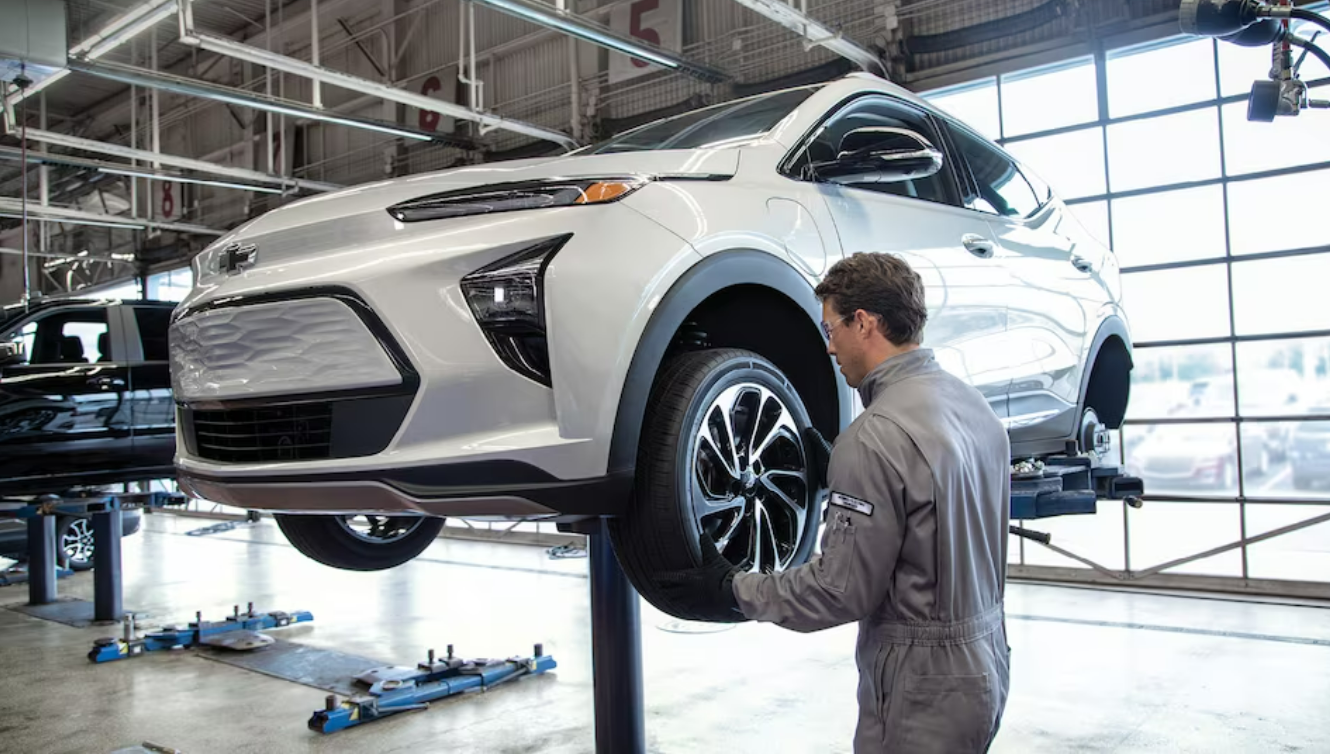
Participating EV dealers are undergoing training so they’ll be able to answer customers’ questions and guide them to the right vehicle choice for them. Through the Dealer Community Charging Program, GM will work with dealers to help expand charging access in their communities.
Even in times of change, there are things you can count on. For decades, the first, best source of information about new Chevrolets has been your local Chevy dealer. And with a full lineup of new electric vehicles arriving by the end of the year, your local Chevy EV dealer will be ready to help anyone who’s interested in navigating the move to an EV.
“Participating Chevrolet dealers are taking the right steps to modernize and support a more rapid acceleration to electric vehicles,” says Nate Giannettino, Chevrolet’s manager of EV Readiness. “Over the next year, Chevrolet EV dealers are making substantial investments to modernize their facilities.”
EV-specific training
“For generations, people have grown up talking about horsepower, miles per gallon,” says Logan Page, a Chevrolet dealer operator in Utah. EVs are introducing a new lexicon, and with so many more people considering electric vehicles, dealers are anticipating a broader range of questions from people arriving at dealerships. That means salespeople need to be prepared.
Quarterly training, a requirement for any Chevy salesperson selling electric vehicles, is equipping them with the knowledge they need to answer customers’ questions, whether those questions are about technology, infrastructure, or battery range.
EV-specific tools
Through the Dealer Community Charging Program, GM is working with dealers to expand access to charging stations, including in underserved rural and urban communities. Ultimately, the goal is to add up to 40,000 public Level 2 chargers across the U.S. and Canada as part of the program.
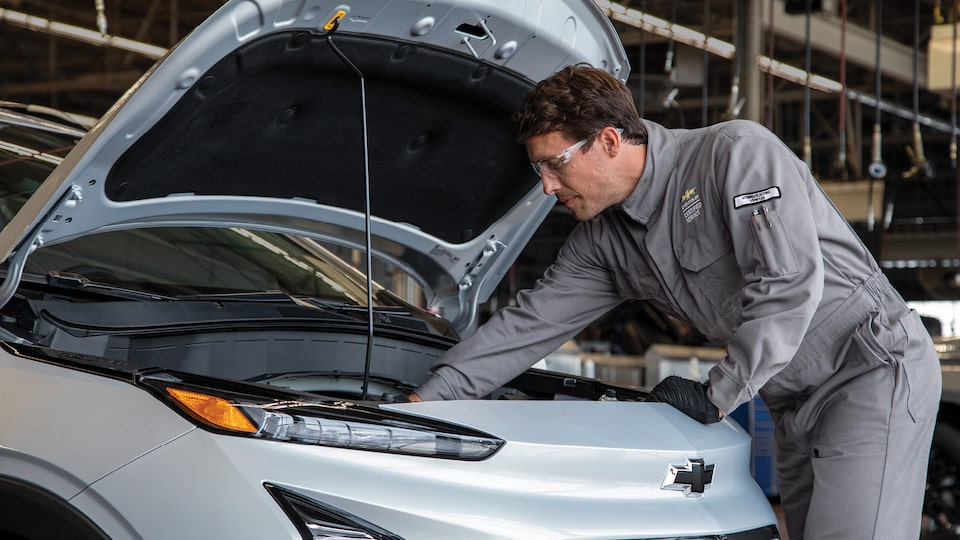
EV dealers are also making upgrades to their service departments, including additional training for the service employees and adding hoists and forklifts capable of transporting components for electric vehicles.
“OVER THE NEXT YEAR, CHEVROLET EV DEALERS ARE MAKING SUBSTANTIAL INVESTMENTS TO MODERNIZE THEIR FACILITIES.”
— NATE GIANNETTINO
Owner-specific approach
Both Giannettino and Page say that one of the most common misconceptions prospective EV buyers have is about range. Some don’t realize how much range EVs can have today. Others think they need more range for their daily lives than they really do. Addressing those concerns means understanding the buyer and their needs, same as it’s always been.
“That’s a lot of our initial interview with guests when they come through the doors: Finding out what they’re using their vehicle for and making sure we’re acting as a real-life consultant and a professional, and not just an order-taker or just selling them what we have,” Page says. “We’re explaining the benefits based on what they’re telling us they need and what product seems to fit that mold.”
And that’s a service that hasn’t changed, isn’t changing, and won’t ever change.

Companies share new details on AI collaboration and announce future generative AI explorations
General Motors and Google Cloud today shared new details on how the two companies collaborated to bring conversational AI technology into millions of GM vehicles, helping drivers in a variety of ways. Since its launch in 2022, GM’s OnStar Interactive Virtual Assistant (IVA), has been powered by advanced, intent-recognition algorithms that use Google Cloud’s conversational AI technologies, providing OnStar Members with responses to common inquiries, as well as routing and navigation assistance. The successful deployment of Google Cloud’s AI in GM’s OnStar service has now opened the door to future generative AI deployments being jointly piloted by GM and Google Cloud.
“Generative AI has the potential to revolutionize the buying, ownership, and interaction experience inside the vehicle and beyond, enabling more opportunities to deliver new features and services,” said Mike Abbott, executive vice president, Software and Services, GM. “Our software-led approach has accelerated the creation of compelling services for our customers while driving increased efficiency across the GM enterprise. The work with Google Cloud is another example of our efforts to transform how customers engage with our products and services.”
GM’s decision to collaborate with Google Cloud in exploring new, business-wide generative AI applications builds on a journey the two companies began together in 2019 when GM named its first vehicles with Google built-in. Since then, the number of GM vehicles with Google built-in has grown, giving customers easy access to Google Assistant, Google Maps and Google Play, directly from their vehicles’ center displays. That collaboration soon expanded to the deployment of Google Cloud’s conversational AI technology, Dialogflow. With this technology, GM’s OnStar virtual assistant is now handling more than 1 million customer inquiries a month in the U.S. and Canada and is available in most model year 2015 and newer GM vehicles connected by OnStar.
“General Motors is at the forefront of deploying AI in practical and effective ways that ultimately create better customer experiences,” said Thomas Kurian, CEO, Google Cloud. “We’re looking forward to a deepened relationship and more collaboration with GM as we explore how the company uses generative AI in transformational ways.”
GM’s OnStar Interactive Virtual Assistant (IVA), which launched in 2022, uses advanced AI-based, intent recognition technologies powered by the Google Cloud’s Dialogflow technology to provide OnStar Members with routing and navigation assistance, including turn-by-turn directions. The OnStar IVA assists with common inquiries initiated by the non‑emergency OnStar blue button push in GM vehicles, but also endeavors to distinguish phrases and words that may signify an emergency situation and help to quickly route the call to OnStar’s specially trained emergency Advisors.
With this technology, OnStar has been better able to immediately understand a customer’s question or request the first time it is spoken, providing a response with a modern, natural sounding voice. Customers hear the same familiar OnStar “voice” whether they are sitting in their vehicle or calling on the phone and have reacted positively to experiences on calls without hold times. With the OnStar IVA successfully helping GM customers requesting navigation assistance, OnStar Advisors have been able to spend more time with customers with requests that require a human touch.
Additionally, GM is leveraging Google Cloud’s Dialogflow technology to deploy chatbots that can conversationally help answer customer questions about GM vehicles and product features based on the technical information from GM’s extensive vehicle data repositories. With this technology, customers can get quick answers to questions like, “Tell me more about GM’s 2024 EV lineup,” or learn how to take advantage of new technology features in their vehicle. These chatbots are active across GM’s corporate and vehicle brand websites, bringing additional convenience to customers looking for specific vehicle related information.
GM’s initiative to place Dialogflow into its OnStar technology will earn technology industry recognition at Google Cloud’s annual Next event in San Francisco. Among a heavily competitive pool of companies across industries using Google Cloud technologies, GM stood out for its successful and broad deployment of AI, earning it a “Talent Transformation” award.
EV Interiors Go Tech-Centric

This article originally appeared in Chevrolet’s online magazine, New Roads.
Blazer EV and Equinox EV interiors and screens reinvent what Chevys can look like.
- An expansive 17.7-inch diagonal free-form display screen tilted toward the driver will be standard on Blazer EV and available on Equinox EV.
- Interior designers focused on integrating the tech in a way that optimizes the owner experience.
Looking inside Chevrolet’s all-electric SUVs, most people notice the expansive display screen or modern, minimalistic feel. Arthur Louro, however, sees each individual stitch, air vent, and seam.
Louro is a creative designer at Chevrolet who helped design the interiors of the Blazer EV (SS, shown, available fall 2023) and Equinox EV (available starting fall 2023).
“WE WANTED TO FOCUS ON THE TECHNOLOGY AND MAKING THE INTERIOR FLOW NICELY AROUND THAT.”
— ARTHUR LOURO
He and other designers were presented with no small task: design all-new interiors and infotainment software from the ground up. The results — interiors that are sporty, premium, and tech-centric — are a big step forward.
INSPIRED INTERIOR
The creative design teams looked for inspiration in places where minimalism is paired with a premium feel, such as in consumer electronics, and even jet engines and analog watches. Click or tap the hotspots to learn more.
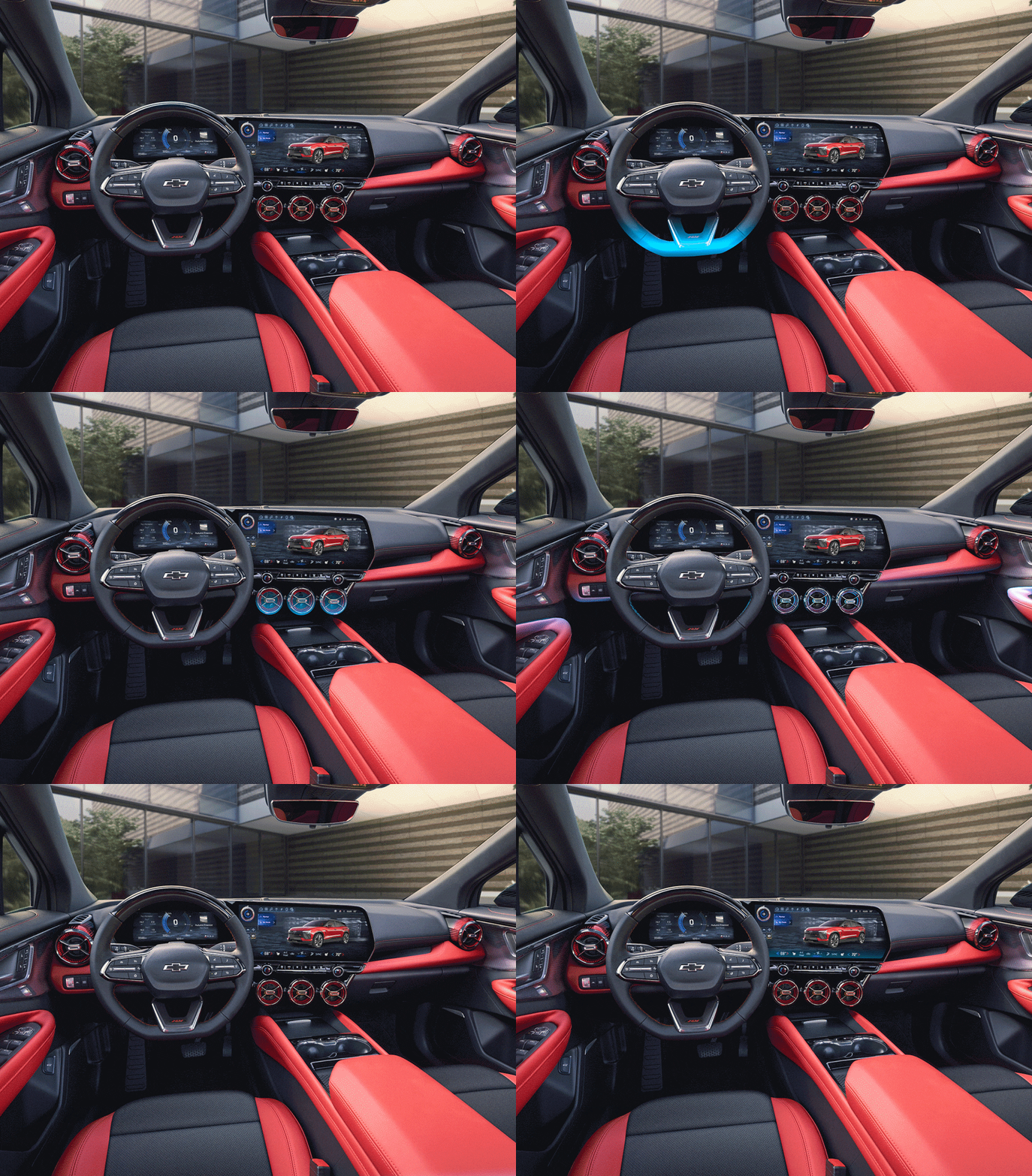
While every detail was scrutinized, the big focus remained on integrating the tech with the interior. “The goal was to utilize and enhance the technology as much as we could,” Louro says. “We wanted to focus on the technology and making the interior flow nicely around that.”
Achieving that meant close collaboration with the team working on the software that powers both the center touch-screen and the Driver Information Center, where the gauge clusters appear.
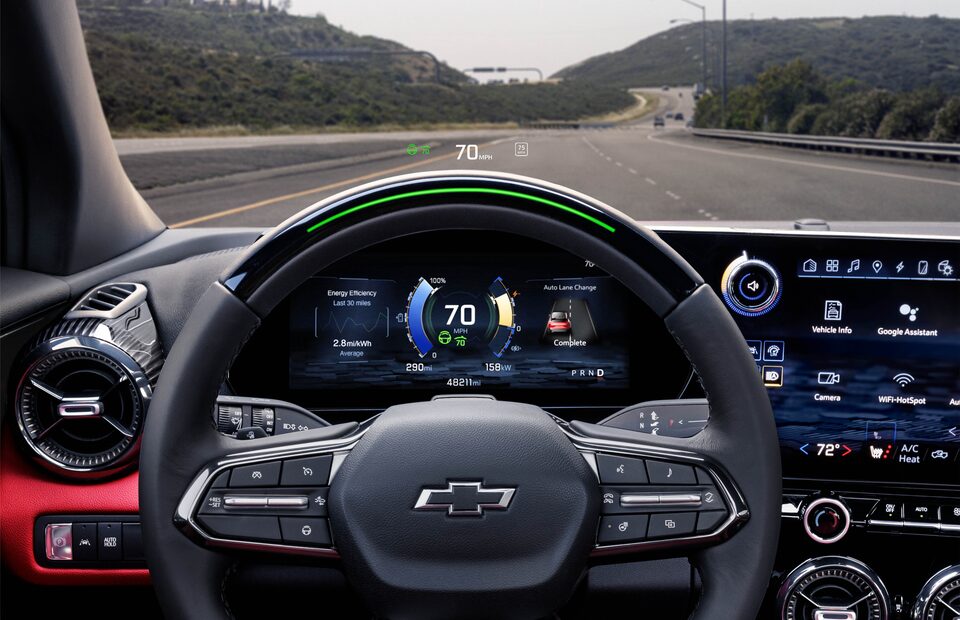
RECONFIGURABLE GAUGE CLUSTER
The appearance of the gauge cluster can be configured depending on the current driving mode and style.
That collaboration resulted in eliminating some physical buttons and placing their function within the available touch-screen, along with tilting the screen toward the driver, centering this eye-catching piece of tech in the SUVs.
How those buttons appear — and where — was just one of the challenges that Ki Hyun Ahn’s team had to solve. Ahn is the creative director of the user experience (UX) team and oversees the visual execution of infotainment systems.
Ahn says that as the displays in vehicles become one of the focal points of the interior, the software behind them has become that much more important. So Ahn’s team redesigned many of the system components, including icons and fonts, while keeping Chevrolet’s existing brand identity front of mind.
Both the UX software designers and interior designers know that experiences are made from details. When it comes to the Blazer EV and Equinox EV, no detail has been overlooked.
Connect with us


Recent Blog Entries
- Chevrolet Stars & Steel collection: Meet the designer behind the special-edition vehicles celebrating America’s 250th anniversary
- The 2027 Chevrolet Corvette Stingray Hits 200 MPH—Proving American Performance Is Better Than Ever
- The Next-Generation 2027 Chevrolet Silverado Is Here — And It’s Built for the Pacific Northwest
- Chevrolet’s Smart Trailering Technology Makes Towing Easier Than Ever for Seattle-Area Adventurers
- Why the Duramax Diesel Is Becoming a Favorite for Seattle-Area Truck and SUV Drivers