




Living Color

This story appears in Chevrolet’s online magazine, New Roads Magazine. We wanted to share it to give everyone a glimpse into how the colors of Chevrolet vehicles are decided…years in advance!
When it comes to choosing a color for your next vehicle, Jennifer Widrick is way ahead of you.
Shopping for a new car involves a lot of decisions. Of all of them, choosing the color, material, and finish is probably the most fun. Those details help make a vehicle yours. Whatever you’re thinking for your next Chevrolet, there’s a good chance Jennifer Widrick, director of Global Color, Material, and Finish at General Motors, has thought of it too.
Widrick has nearly two decades of experience working as a color and materials expert, first discovering a color and trim class while attending Detroit’s College for Creative Studies as a multidisciplinary artist. “All parts of my personality were firing, and it was really where I got to bring multiple materials together to tell stories, to create moods,” she says.
Chevy’s diverse lineup and customer base allow Widrick and her team to push the limits of exterior color options. Right now, Widrick says, low-gloss and solids are popular, while effect pigments — rich, highly chromatic, complex colors like blues, greens, oranges, and reds — are having a moment as well.

“Chroma [bright, vibrant color] is on the rise, and people want those opportunities where instead of a black you might opt for a blue,” she says. “Certainly red indicates sport, and we’ve seen a lot of lighter colors come into play, so the market is quite open, and that’s what is exciting about Chevrolet.”
One growing trend is a pop of color on the roof to contrast with a more solid, neutral-colored vehicle body, or vice versa. “The Trailblazer is an excellent example of how the available two-tone roof opens up the flexibility to really have a lot of bold color,” Widrick says.
The art of color-casting
To forecast the colors customers will want, Widrick and her team work with groups across the globe to identify design trends and stay on top of cultural and consumer attitudes. “Quick-to-market concepts can be driven by seasonal products like fashion, while for inspiration staples we might utilize architecture or interior design,” Widrick says. Most recently, the team has been inspired by shoe design and innovative tech products.
“Color and trim is the more emotional side of the business,” Widrick says. “When there’s something in the world that we see that makes us feel something and then we apply that to products — and it makes others feel that too — that’s a magical moment for us.”
Widrick’s team is typically color forecasting three to five years in advance, meaning they’re currently planning up to the 2027 and 2028 model years.
“OUR AIM IS ALWAYS TO HELP CUSTOMERS REACH THEIR ASPIRATIONAL SELVES, AND WE HAVE TO OFFER VARIETY TO BE SURE WE’RE OUTFITTING THEM WITH MEANINGFUL AND IMPACTFUL SELECTIONS.” – Jennifer Widrick
VIBRANT VOCABULARY
Get to know the terms you might encounter when choosing the exterior color of your next vehicle.
TINTCOAT
A tint of color in the clearcoat used to enhance the basecoat. Tinted clears add depth and richness to show off the form of the exterior body.
IRIDESCENT
A shimmering or reflective effect in the appearance, created with combinations of exterior color pigments.
METALLIC
A paint appearance that is created through reflective pigment. The effect it creates is bright and with movement, used to highlight color on surface.
TRICOAT
A premium option that allows more metallic pigments to be added and involves painting a base, middle, and clearcoat to achieve depth of color and durability.
A common thread
Color and trim aren’t just icing on the cake at Chevy; they’re a critical component in the design of new vehicles. That’s why Widrick’s team is integrated from the beginning of the development process all the way through launch.
“Shape and material have this intrinsic connection. When the shape and material are considered upfront, that’s truly when you get really beautiful executions,” Widrick says. “There are scenarios where we’re pursuing material-led design, where there is a specific material or sustainability goal that we’d like to achieve, and we’re working with the design teams in the inception.”
One of Widrick’s goals is to seamlessly integrate sustainable materials while still meeting expectations around appearance, durability, and quality.
“It is a thread that’s in everything that we do,” she says. “And it’s a very exciting time in the industry for us. As we expand our business to EVs, we are also pushing material technology to deliver the most responsible executions. Along with that, we’re pushing and pulling the product and dressing it for feelings and moods that excite and inspire.
“Our aim is always to help customers reach their aspirational selves,” Widrick adds. “And we have to offer variety to be sure we’re outfitting them with meaningful and impactful selections.”
Story by Casey Rosenhaus/Photography by Jenny Rishner
Schedule Your Service Appointment Online!
Did you know that you can schedule a service appointment at Burien Chevrolet right on our website? Now you can make an appointment right when you think about it…even in the middle of your work day…without making a phone call!
Making an appointment for your car’s regular maintenance or a repair is as easy as going to Burien Chevrolet website, quickly making an account or signing in with your Google account, giving the basic information about your car, and then choosing a date/time that works for you.
Let this be your reminder to make that service at Burien Chevrolet today appointment today!

The classic Chevrolet Trailblazer got a major update in look and technology. Check out the all-new 2024 Chevy Trailblazer. Stop in to Burien Chevrolet or give us a call to talk about how to get one!

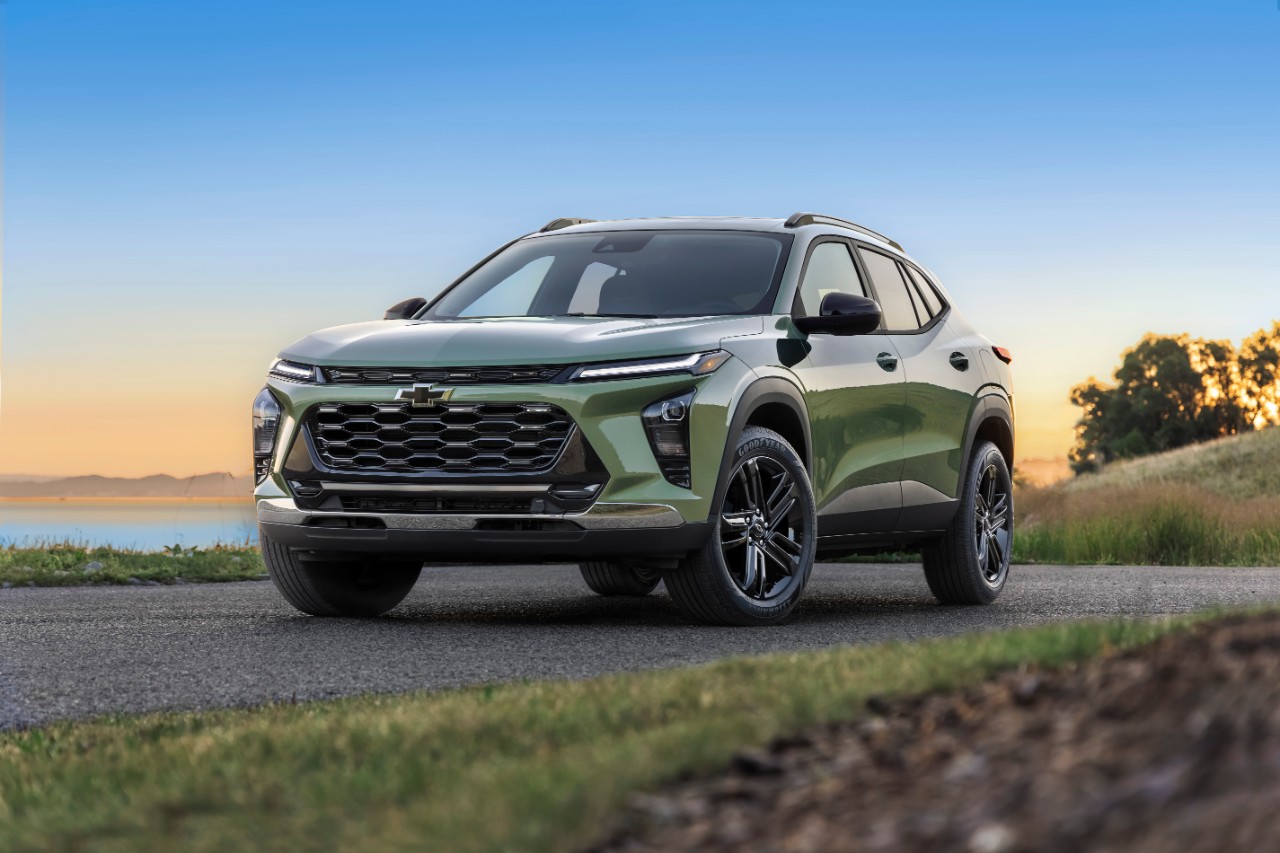
To celebrate the launch of the 2024 Trax, one person will receive $100,000 and the all-new Chevy Trax for three months to help chase their dream
In anticipation of the arrival of the 2024 Chevrolet Trax this spring, Chevy is announcing an opportunity for a chance to become a “Lead Dream Chaser.” This three-month opportunity will enable one person to pursue their lifelong dream or passion project. The Lead Dream Chaser will share their journey on social media and in return receive $100,000 and three months with the all-new 2024 Chevrolet Trax.
Chevy has teamed up with Everette Taylor, a creative entrepreneur and CEO of Kickstarter, to identify the best person to serve as Lead Dream Chaser. Everette is deeply experienced in building and growing successful businesses, and is passionate about supporting others to help with their own career goals, making him a great teammate to help find Chevy’s Lead Dream Chaser.
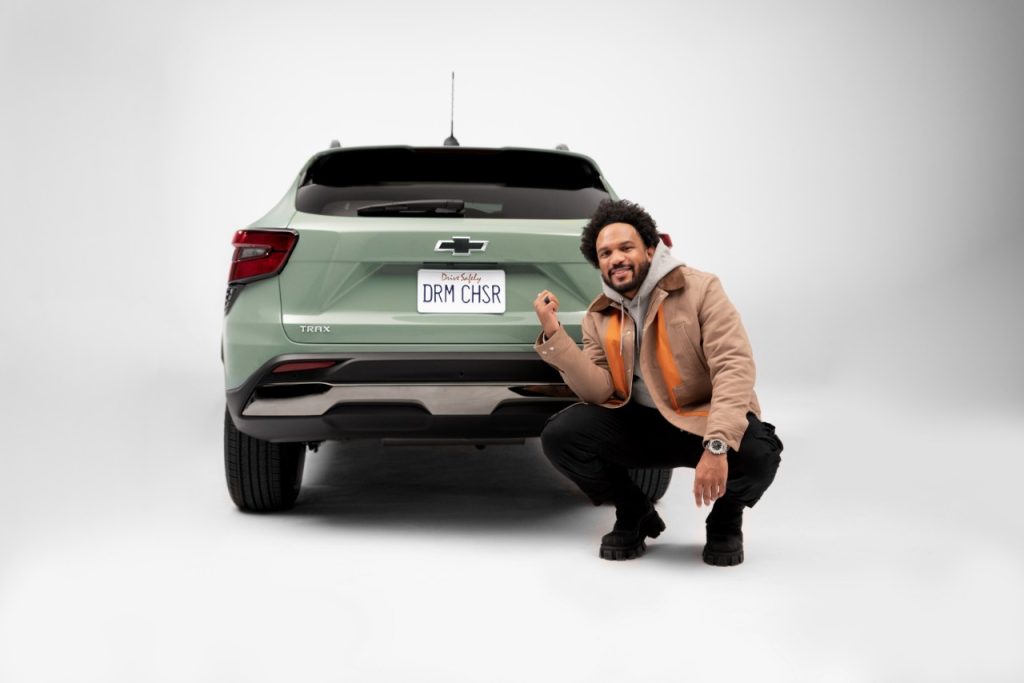
“The past few years have caused many to consider turning their ideas and ambitions into reality, and I’m excited to help Chevy find a qualified person who will pursue their dream,” said Taylor.
The 30-day submission period opened the afternoon of Friday, Jan. 13. Friday afternoons are the most popular time of the week for daydreaming, according to a Chevy-commissioned Harris Poll survey.
To enter for a chance to become the Lead Dream Chaser, eligible entrants can visit ChevyDreamChaser.com to submit a short video about themselves, their dream and how they plan to leverage the all-new Trax and funds to pursue a passion project or help their community. Entrants will also need to share how they plan to document their story on social media along the way. Chevy will announce the finalists in March and the selected individual will be announced in April.
The all-new 2024 Chevy Trax is a stylish small SUV offering the practicality of a compact car and the utility of an SUV. Larger than today’s Trax, it offers more space for passengers and cargo, a robust array of standard safety features and technologies to help keep customers connected — all great offerings for Chevy’s Lead Dream Chaser.
“We look forward to reviewing the submissions and following along the journey of the Lead Dream Chaser,” said Steve Majoros, chief marketing officer, Chevrolet. “The all-new Chevy Trax has everything you need to pursue your passion in style, so we encourage every dreamer to check it out.”

First-ever eAWD Corvette E-Ray uses an advanced electrified propulsion system in addition to its 6.2L LT2 Small Block V-8 enabling all-season performance and composure — and 0-60 mph in 2.5 seconds
Exactly 70 years after the Corvette debuted at Motorama in New York City, Chevrolet has returned to introduce the first-ever electrified Corvette with all-wheel-drive and a powerful 6.2L LT2 Small Block V-8, the 2024 E-Ray.
“In 1953, the enthusiastic reaction to the Chevrolet Corvette concept kicked off seven decades of passion, performance and American ingenuity,” said Mark Reuss, General Motors president. “E-Ray, as the first electrified, all-wheel-drive Corvette, takes it a step further and expands the promise of what Corvette can deliver.”
Developed to be the Corvette owners can arrive in anywhere, no matter the season, the new E-Ray — available in removeable roof coupe and hardtop convertible models — uses electrification to enhance the driving experience with intense straight-line performance, all-weather confidence and sure-footed grand touring capabilities that can only be achieved with eAWD.
E-Ray is also the only sports car pairing two separate propulsion systems to provide naturally aspirated V-8 power with electrified responsiveness powered by eAWD, making it one like none.
“Corvette has been a halo for Chevrolet since 1953,” said Scott Bell, vice president of Chevrolet. “E-Ray’s unprecedented blend of confidence, luxury performance, sophistication and style provides a new reason for more people to experience Corvette.”
The E-Ray is the quickest production Corvette in history, clocking a 2.5-second 0-60 mph time before breezing through the quarter-mile in 10.5 seconds.
“Corvettes must provide an exhilarating driving experience on backroads and tracks, and E-Ray nails it,” said Tadge Juechter, executive chief engineer, Corvette. “The electrification technology enhances the feeling of control in all conditions, adding an unexpected degree of composure.”
A near immediate feeling of thrust from low-end torque is core to the Corvette driving experience, and the E-Ray packs plenty of it. Power comes from the 6.2L LT2 Small Block V-8, putting 495 horsepower and 470 lb-ft of torque to the rear axle. It is complemented by an electric motor that channels an additional 160 horsepower and 125 lb-ft of torque through the front wheels via a 1.9 kWh battery pack, which is located between the seats. In total, E-Ray produces a combined 655 horsepower from both the electric motor and Small Block V-8.
Creating its own lane
E-Ray’s intelligent eAWD system is constantly learning the road surface, seamlessly adapting to meet traction conditions and driver needs. During spirited driving and in low traction environments, E-Ray’s eAWD system applies additional power to the front wheels, helping to enhance vehicle stability.
There is no need for plug-in charging for the E-Ray’s battery system. The battery is charged via regenerative energy from coasting and braking, as well as during normal driving.
Additional features and technologies of the all-new E-Ray include:
- Stealth Mode, an electric drive mode for the street, up to 45 mph
- New lightweight lithium-ion 12-volt battery that supports the LT2 V-8 engine’s stop/start functionality
- Standard Brembo Carbon Ceramic brake system for optimal braking performance
- Standard Magnetic Ride Control 4.0 with three distinct suspension settings
- Staggered 20- and 21-inch wheels with Michelin Pilot Sport all-season tires. Michelin Pilot Sport 4S summer tires are available with an optional performance package
- Low, wide stance with crafted body styling that is 3.6 inches wider overall than Stingray
- Visceral sound experience that embodies the car’s dominating presence. The electric front motor works in harmony with the LT2 engine to create an invigorating sound
- Enhanced roster of driver assistance technologies (shared with all 2024 Corvette models), including Lane Keep Assist with Lane Departure Warning, Forward Collision Alert and Automatic Emergency Braking.
Electrified propulsion details
The 2024 Corvette E-Ray’s electrified propulsion system provides exhilarating acceleration to power out of corners and effortlessly complete passing maneuvers. It can also provide limited all-electric propulsion at the driver’s discretion upon startup.
E-Ray’s standard Active Fuel Management system uses the electric motor to extend 4-cylinder operation in various driving scenarios.
The amount of electric assist is tailored within each of the Corvette E-Ray’s six driver-selectable modes: Tour, Sport, Track, Weather, My Mode and Z-Mode. Drivers can also select the Charge+ feature which maximizes the battery’s state of charge.
E-Ray Performance App on the infotainment system provides the driver with technical insights into how the propulsion system is operating. There are three primary display layouts:
- Gauges (displays dynamic power output from electric motor and V-8 engine)
- Dyno (provides graph of power/torque across selectable time intervals)
- Data (showcases electrical system performance and efficiency).
The Corvette E-Ray’s electric motor over the front axle is compact, preserving space in the front storage compartment.
Stealth Mode and tracking the E-Ray
The Corvette E-Ray’s two driver-initiated electric modes enable the car to travel under electric propulsion in certain conditions. The electric motor also optimizes track performance.
Stealth Mode enables all-electric driving, when selected at start-up, for a period of time before the engine turns on for normal driving. It is designed for quietly exiting a neighborhood, with a maximum speed of 45 mph. The engine automatically engages if the vehicle’s speed exceeds the limit, additional torque is requested by the driver, or the E-Ray’s battery pack is depleted.
When it comes to leveraging the electrified propulsion system for enhanced track performance, E-Ray’s eAWD control system applies torque to the front axle as needed. The Charge+ feature can be used to maximize battery state of charge for extended lapping.
The custom-designed Performance Traction Management (PTM) modes are optimized in concert with the eAWD propulsion system.
Distinguished design
E-Ray’s appearance builds on the refined athletic styling and performance-driven design Corvette customers know and love.
At a glance, the E-Ray shares its purposeful, wide-body proportions with the Z06, accommodating wide wheels that help manage the car’s greater torque delivery. The lightweight alloy wheels have a twisted five-spoke star design that is exclusive to E-Ray.
“There’s never been a Corvette like E-Ray and its sophisticated design reflects that,” said Phil Zak, executive design director, Global Chevrolet. “It starts with the body color trim which draws your full attention to the exotic proportions of the E-Ray. The interiors allow customers to reflect their individual personalities with their choice of color executions that provide a refined or dynamic sport look and feel.”
E-Ray design highlights include:
- Four aluminum wheel finishes
- Fourteen exterior color choices — including new for 2024 Riptide Blue, Seawolf Gray and Cacti
- An E-Ray-exclusive body-length stripe package in Electric Blue
- Standard carbon flash badging
- Available black exhaust tips and bright badging
- Available carbon fiber ground effects
- Optional carbon fiber wheels in carbon flash, visible carbon fiber finish or visible carbon fiber with a red stripe
The E-Ray also introduces the all-new Artemis Dipped interior, which features complementary deep green tones on nearly every interior surface and will only be available on 2024 Corvettes. There are multiple options for customers to select when it comes to personalizing their E-Ray’s interior including two carbon fiber trim packages, three seat choices, seven interior colors, and more.
Additionally, there are new Charge+ and Stop/Start buttons on the console and updates to the infotainment system and instrument cluster aimed at providing a more integrated appearance.
Coming later this year
The 2024 Corvette E-Ray goes on sale in 2023, with an MSRP of $104,295 for the 1LZ coupe and $111,295 for the 1LZ convertible model, with production to take place at GM’s Bowling Green Assembly facility in Kentucky, from U.S. and globally sourced parts. Go to chevrolet.com for more information.

First-ever all-wheel drive and electrified Corvette, the 2024 E-Ray, makes dramatic debut on the ice
On January 17, the first-ever electrified Chevrolet Corvette, the 2024 E-Ray, was revealed in dramatic fashion at The Rink at Rockefeller Center, performing advanced maneuvers on the ice to showcase the vehicle’s eAWD capabilities, while also marking 70 years of performance and innovation for Corvette.
Exactly 70 years ago, on Jan. 17, 1953, Corvette made its world debut at GM Motorama in New York City.
“In honor of Corvette’s momentous debut in New York City, we returned exactly 70 years later to expand the idea of what a Corvette can deliver with the electrified all-wheel drive Corvette E-Ray,” said Scott Bell, vice president of Global Chevrolet.

At General Motors, we believe self-driving cars will change the world, and we’re at a pivotal point when people will be able to experience them in the near future and we’re excited about that. We recently donated one of General Motors’ first publicly driven self-driving vehicles to The Henry Ford Museum, an internationally recognized history destination that honors the innovations that helped shape America. The modified pre-production Chevrolet Bolt EV is the first autonomous car in the Dearborn, Michigan museum’s collection of 26 million artifacts.
A significant step in self-driving technology
The car began testing on the streets of San Francisco in 2016 and is a significant step in the development of self-driving technology. It was developed in close collaboration with Cruise Automation and represents our unique approach to building AVs from the ground up, seamlessly integrating the self-driving system into the vehicle. The Bolt EV is equipped with cameras, radar and LIDAR sensors and has an onboard computer. The sensing system and computer platform allow the vehicle to observe the world around it in 360 degrees and make near real-time decisions to navigate the road safely.
The Chevrolet Bolt EV takes its place in the “Driving America” exhibit at The Henry Ford Museum
Changing our lives forever
“Autonomous vehicles will change people’s lives forever, just as the automobile itself did more than a hundred years ago,” said General Motors President Mark Reuss. “The Henry Ford is a treasured institution where past and present innovations are documented and displayed, and GM is proud to provide our autonomous test vehicle to serve as an inspiration to the innovators of tomorrow.”
Increasing safety and access to transportation
This technology will play a key role in our vision to create a world with Zero Crashes, Zero Emissions and Zero Congestion. According to the National Highway Traffic Safety Administration, in 2017, more than 37,000 people in the United States lost their lives to car crashes, including almost 6,000 pedestrians. Self-driving vehicles hold enormous potential benefits for society by eliminating human driver error and providing access to transportation.
Supporting innovative experiences
In 2017, General Motors gifted The Henry Ford Museum $5 million toward innovative experiences and new exhibitions and programs. Check out the self-driving Bolt EV today near the entrance of the “Driving America” exhibit inside The Henry Ford Museum of American Innovation.

A Henry Ford guest experiences a self-driving vehicle for the first time
General Motors’ self-driving Chevrolet Bolt EV is an example of true American innovation. Our passion, imagination and drive to transform the future of mobility is stronger than ever.
Kick Off the New Year and New Adventures with Nomad

If 2023 is going to include overlanding adventures, make sure your preparations include a visit to Nomad Overland Adventures in Burien.
Nomad is family-owned and operated shop that specializes in Ironman 4×4 gear and installation. It’s also backed by Burien Chevrolet and conveniently located right in Burien!
The expert staff at Nomad can provide knowledgable consultations based on your future adventures and goals, as well as on-site installation of all equipment for many makes and models, including Jeep, Toyota, Subaru, Lexus, GMC, Ford, Chevrolet, and more.
Nomad offers complete build packages, camping supplies, roof racks, snorkels, suspension, and more. They will have (or can get) exactly what you need and professionally install it, so you can have confidence in your vehicle while you adventure.
Before you head off on your next overland trip, be sure to stop in to Nomad to see how they can help you and your vehicle!
Check out Nomad Overland Adventures Instagram, Facebook, and YouTube to learn more about how they can help you adventure better!
Silverado EV Comes into View
This article first appeared in Chevrolet’s online magazine, New Roads.
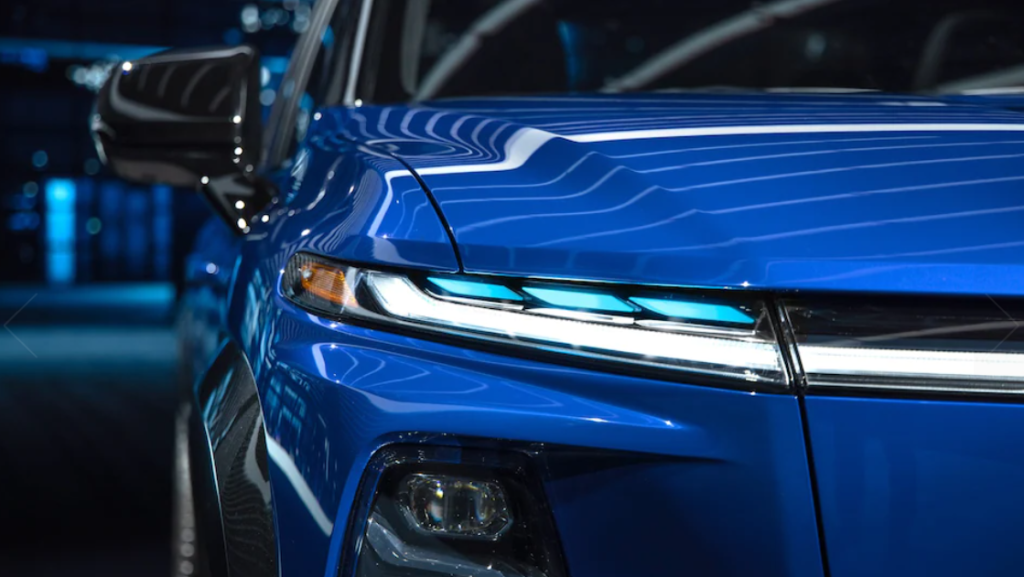
After revealing the Silverado EV in January, Chevy has been hard at work to be sure future customers will have the best possible ownership experience with the only electric pickup worthy of the Silverado name.
Beginning with its keynote unveiling at CES in January 2022 and the subsequent Super Bowl LVI ad that reimagined one of the most iconic opening sequences in TV history, the Silverado EV, arriving in fall 2023, has been building excitement and momentum. So much momentum, in fact, that to take it along for a good, long drive, you’d need a Silverado EV.
“We purposefully decided to build an all-new vehicle, an all-new truck from the ground up,” says Nichole Kraatz, chief engineer for battery-electric trucks. “It’s so important for full-size truck customers to be able to tow, haul, and do everything they can do in a traditional pickup truck.” That includes getting an available GM-estimated 400 miles† of range on a full charge, Kraatz says.
When the Silverado EV First-Edition RST arrives, it will offer the kind of capability drivers expect from a truck with the Silverado name: GM-estimated 754 horsepower† and 785 pound-feet of torque† in Wide Open Watts mode, and GM-estimated 10,000 pounds of towing capacity.† This power and capability is enabled by the groundbreaking Ultium battery platform, which also allowed engineers to hit that range number Kraatz mentioned.
So the baseline was set at the beginning of the year. As 2022 progressed, the emphasis was on continued behind-the-scenes work by designers and engineers as well as other more public tasks to prepare for the truck’s arrival. Those included readying Factory ZERO, the Michigan plant where the Silverado EV will be built,† and preparing the electric infrastructure that not only will welcome Silverado EV owners but will also benefit owners of any of the vehicles in Chevy’s expanded family of EVs.
Out of the public eye, those designers and engineers have been busy perfecting all the important details. The vast majority of people who reserved the Silverado EV said they’ll use it for towing, so Chevy’s team has been hard at work to ensure customers will have the towing capabilities they’ve come to expect.
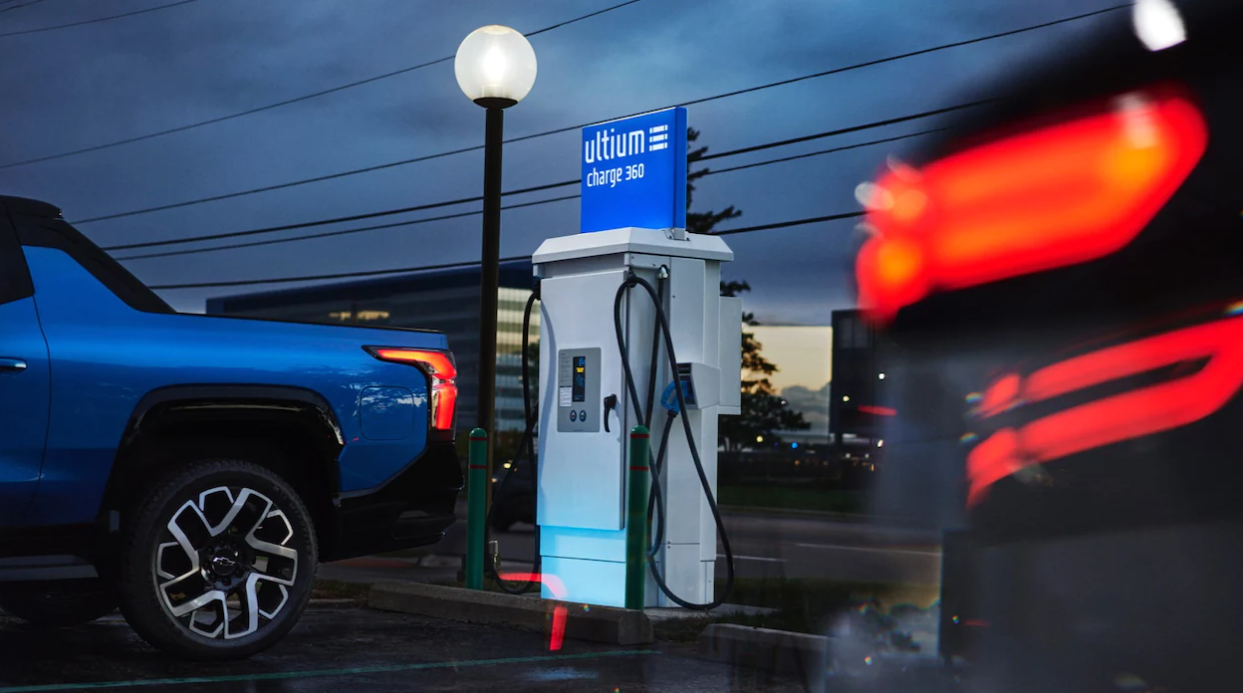
Preparing for wider EV adoption in the coming years, Chevy and GM continued to build out the important support systems owners will need to make going electric easy. With an Ultium Home accessory charging unit, you’ll be able to move power between your properly equipped Silverado EV and your home to keep your lights on for up to 21 days† in the event of a power outage.
In 2021, GM announced a $750 million investment in charging infrastructure and introduced Ultium Charge 360, a charging ecosystem designed to make electric vehicle charging a seamless experience. In 2022, the work of expanding the charging network continued; Chevy EV owners now have access to more than 100,000 charge points. The Energy Assist feature in the myChevrolet Mobile App† helps owners find those chargers and navigate the best routes. Thanks to Plug and Charge, a service that allows you to simply plug your Silverado EV into a public charger and start charging, there’s no need to even swipe a credit card. After a one-time activation in the myChevrolet app (along with active OnStar Connected Services and an EVgo account), plugging in your vehicle is as easy as plugging in your phone.
GM has also been working with Pilot and Flying J travel centers to install 2,000 fast chargers in 500 locations. And another initiative, the Dealer Community Charging Program, aims to work with GM dealers to place up to 40,000 Level 2 chargers in rural, urban, and suburban communities in the U.S. and Canada. All this work to increase access to charging infrastructure is part of careful planning that has happened alongside vehicle development.
“We don’t want drivers thinking about charging,” says Dalya Aboona, Global EV Ecosystem & Charging Experience assistant manager. “We can’t just talk the talk. We have to make it happen.”
Wherever you take your Silverado EV or whatever you need it to do, you’ll be covered thanks to the groundwork laid in 2022.
PHOTOGRAPHY: CLINT DAVIS, DAVE HILL
GM Advances Dealer Community Charging Program
Program aims to nearly double number of public Level 2 charging stations in U.S. and Canada
- First charging stations installed in Wisconsin and Michigan
- Nearly 1,000 GM dealers enrolled to date
- FLO selected as charging station provider
GM celebrated the official launch of its Dealer Community Charging Program with the installation of the first community charging stations in Wisconsin and Michigan. Since the program was announced in late 2021, nearly 1,000 GM dealers have enrolled — representing almost a quarter of all GM dealers in North America. The program initially opened to Chevrolet dealers earlier this year and will expand to Buick, GMC and Cadillac dealers in January 2023.
Through the Dealer Community Charging Program, GM and its dealers are working together to expand charging access in communities, including underserved rural and urban areas where EV charging is often limited or non-existent. Participating dealers are eligible to receive up to 10 19.2-kilowatt Level 2 charging stations. GM then connects dealers with installation providers as needed to place the charging stations at key community locations.
Ultimately, GM aims to install up to 40,000 Level 2 charging stations across the U.S. and Canada through the program, nearly doubling the current number of public Level 2 charging stations. These charging stations will be available to all EV drivers — not just GM EV customers — and will deliver the most power available to a Level 2 charger.
“Nearly 90% of the U.S. population lives within 10 miles of a GM dealership. Our dealers are deeply involved and trusted in their communities and are well positioned to determine locations that expand access to EV charging, including at small businesses, entertainment venues, schools and other popular destinations,” said Hoss Hassani, vice president of GM EV Ecosystem. “Our dealers are an important enabler of our all-electric future and in many cases will be the catalyst for EV adoption in communities that would otherwise have limited EV infrastructure. Combined with their exceptional ability to service EV drivers across North America, our dealers are now helping to make charging possible across much of the continent.”
FLO has been selected as the charging station provider for the program and supplied the initial charging stations. The company’s first U.S. manufacturing facility in Auburn Hills, Michigan, will serve as the primary production location for the program’s charging stations, supporting the development of a North American EV charging supply chain.
“We are proud to support this extraordinary effort to grow access to public EV charging in thousands of local communities across North America,” said Louis Tremblay, FLO president and CEO. “Together, FLO, GM and GM dealerships will bring reliable charging to drivers from curbside to countryside.”
Wheelers Chevrolet GMC was the first dealer to participate in the program and recently installed its first charging stations at several locations in Marshfield, Wisconsin, including two parks, a library and a sports complex. Young Chevrolet Cadillac was next to install its first charging stations at Memorial Healthcare Wellness Center in Owosso, Michigan. Dealers in Delaware, Georgia, Illinois, Indiana, Kansas, Ohio and Washington state are expected to install their first chargers in the weeks and months ahead.
“We’re excited to be the first dealership in the nation to have these chargers,” said Mary Jo Wheeler-Schueller, owner of Wheelers Chevrolet GMC. “This will help put Marshfield on the map in terms of EV leadership. This is a great stop for commuters to check out our community and see all that Marshfield has to offer.”
The Dealer Community Charging Program is just one aspect of GM’s holistic approach to EV adoption, which includes:
- Bringing a broad portfolio of commercial and consumer EVs to market. These EVs include the BrightDrop Zevo 600 and Zevo 400 electric delivery vans, Cadillac LYRIQ, Cadillac CELESTIQ, GMC HUMMER EV Pickup and SUV, GMC Sierra EV, Chevrolet Silverado EV, Chevrolet Blazer EV and Chevrolet Equinox EV. The Chevrolet Bolt EUV and Bolt EV are two of the most affordable EVs available in the U.S. today.
- Providing an accessible and reliable charging experience across domains – whether at home, in the community or on the highway. GM is investing nearly $750 million to expand charging infrastructure across public domains. This investment includes GM’s collaboration with Pilot Company on a fast-charging network along U.S. highways, as well as its work with EVgo to install 3,250 fast chargers throughout U.S. cities by the end of 2025. GM also has integration relationships with 11 EV charging networks, giving its EV customers access to an additional 110,000 charge points and growing throughout the U.S. and Canada.
- Educating the public about EVs and EV ownership. GM’s EV Live is an immersive, virtual experience that allows participants to interact one-on-one with EV specialists and learn about electric vehicles — for free. By offering this platform, GM aims to equip consumers with the knowledge they need to confidently navigate the world of EVs.
“GM is taking a comprehensive approach to help put everyone in an EV,” said Hassani. “This includes great vehicles, accessible and reliable charging infrastructure, and free educational resources to help make the transition to EVs as seamless as possible. Combined, these efforts will manifest our all-electric future.”
Connect with us


Recent Blog Entries
- Chevrolet Stars & Steel collection: Meet the designer behind the special-edition vehicles celebrating America’s 250th anniversary
- The 2027 Chevrolet Corvette Stingray Hits 200 MPH—Proving American Performance Is Better Than Ever
- The Next-Generation 2027 Chevrolet Silverado Is Here — And It’s Built for the Pacific Northwest
- Chevrolet’s Smart Trailering Technology Makes Towing Easier Than Ever for Seattle-Area Adventurers
- Why the Duramax Diesel Is Becoming a Favorite for Seattle-Area Truck and SUV Drivers