




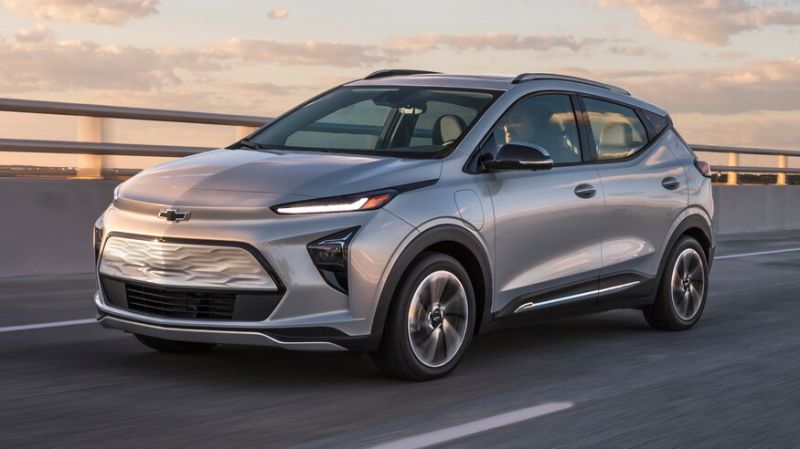
Electric vehicles aren’t a novelty anymore, but they are still new enough that people have some wrong ideas about EVs of all makes and models, including Chevy’s Bolt EV. Chevrolet’s New Roads magazine tackled some of these myths in an online article.
EV Myth Busting
All over America, more people are learning just how easy electric vehicles are to use and integrate into their daily lives. For everything from around-town errands to road trips, EVs are proving themselves capable and cost-effective. In early 2021, Chevrolet introduced the updated 2022 Bolt EV and the larger 2022 Bolt EUV. General Motors has also announced an investment of $27 billion in EV and AV products through 2025, along with the launch of 30 new EVs globally by the end of 2025. With all of this change happening so fast, myths and misinformation about EV technology persist. Let’s collect some facts to set the record straight.
Myth: There’s nowhere to charge.
Fact: “You can easily charge at home. When you’re not home there are 90,000 compatible public charging outlets in the U.S. and Canada, and GM is working with EVgo, the largest public fast-charging network in the nation, to install even more public chargers across America over the next five years.”
Myth: Charging an EV takes too long.
Fact: “On a Level 2, 240-volt charger, your Bolt EUV can grab up to 25 miles of range per hour while you sleep, binge your favorite show, or play with your kids.”
Myth: EVs don’t offer enough range.
Fact: “The vast majority of daily trips can easily be handled by an electric vehicle like the 2021 or 2022 Bolt EV, which have an EPA estimated range of 259 miles on a full charge.”
Myth: EVs can’t be used for road trips.
Fact: “There are any number of websites that can help new owners of electric vehicles plan their trip, and the myChevrolet mobile app has an Energy Assist feature that helps drivers with route planning.”
Myth: EVs don’t work well in cold weather.
Fact: “…whether cars are powered by gasoline or electricity, all vehicles are less efficient in the cold. The critical caveat is that much of the extra energy an EV needs in winter is used to heat the cabin. If you preheat the cabin before leaving, while the vehicle is still plugged into the charger, you can help extend the vehicles range for that trip.”
Connect with us


Recent Blog Entries
- America’s Quickest Production Car: Corvette ZR1X Does 8.675-Second ¼-Mile, Sub 2 Second 0-60
- Red Tag Savings Are Here: 0% Financing on the 2026 Chevy Equinox!
- Chevrolet’s Newest Holiday Card to America Debuts, Highlights Mothers as Keeper of Family Traditions
- Chevy Celebrates 250 Years of America with Stars & Steel Collection
- The $500 Amazon Gift Card Offer Has Been Extended — But Time Is Running Out!