




6,000-pound Vehicles and the 100% Write-Off
Section 179 of the Internal Revenue Code allows businesses to deduct the purchase price of qualifying equipment and commercial vehicles in the year they are placed into service, rather than depreciating them slowly over several years. For business owners, contractors, and self-employed professionals across Burien, Seattle, King County, and the greater Puget Sound, this deduction can dramatically lower the after-tax cost of upgrading to a new Chevrolet truck, van, or SUV in 2026.
The 2026 tax year is especially advantageous for Pacific Northwest businesses. Following the restoration of 100% first-year bonus depreciation, eligible businesses can combine Section 179 with bonus depreciation on any remaining cost basis—allowing you to potentially write off the entire business-use cost of a qualifying Chevy vehicle in year one.
However, vehicle eligibility hinges on details that surprise many buyers—and the most important factor isn't just the badge on the tailgate. It comes down to Gross Vehicle Weight Rating (GVWR) and cargo bed length.
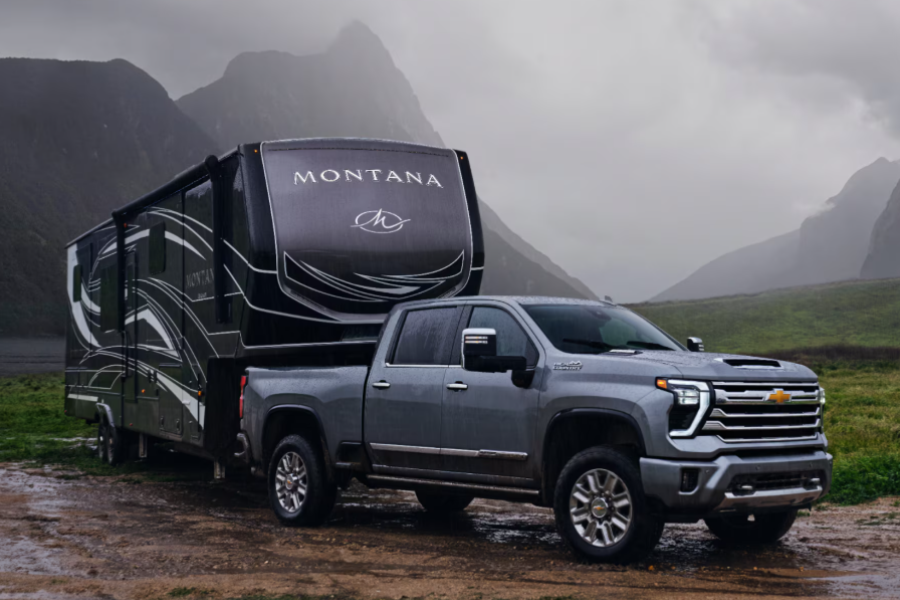
2026 Chevy Silverado 3500 HD, 2500 HD & Silverado 1500 (Standard/Long Bed) pickups exceed 6,000 lbs GVWR and the 6-foot bed threshold.
Tax Disclaimer: This guide is provided for general informational purposes only and does not constitute formal tax, legal, or accounting advice. Section 179 eligibility and savings depend on your business entity structure, taxable income, and specific vehicle use. Always consult a qualified Washington CPA or tax advisor before making a vehicle purchase for tax purposes.
Key 2026 Section 179 Limits at a Glance
For the 2026 tax year (per IRS Revenue Procedure 2025-32), the core thresholds governing business vehicle deductions are:
| 2026 Tax Parameter | 2026 IRS Limit / Requirement |
|---|---|
| Maximum Section 179 Deduction | $2,560,000 |
| Equipment Purchase Phase-Out Threshold | $4,090,000 (reduces dollar-for-dollar above this amount) |
| Heavy SUV Deduction Cap (6,001 – 14,000 lbs GVWR) | $32,000 (applies only to vehicles meeting the IRS "SUV" definition) |
| First-Year Bonus Depreciation Rate | 100% on remaining eligible basis |
| Minimum Qualified Business Use | More than 50% (>50%) |
For the vast majority of small and mid-sized businesses in Western Washington, total annual equipment purchases remain well under the $4,090,000 phase-out threshold. Meanwhile, the $32,000 SUV cap is the rule most frequently misunderstood—because several popular Chevy pickup configurations are legally exempt from it.
The Two Rules That Decide Your Deduction: GVWR & Bed Length
Gross Vehicle Weight Rating (GVWR) is the maximum total weight a vehicle is rated to carry safely, including curb weight, passengers, cargo, and trailer tongue weight. It is set by General Motors and printed directly on the driver-side door jamb sticker.
The IRS sorts business vehicles into three weight tiers:
- 6,000 lbs GVWR or less: Classified as standard passenger automobiles under IRC Section 280F and subject to strict annual luxury auto depreciation caps (models like the Chevy Trax and Equinox generally fall here).
- Over 6,000 lbs up to 14,000 lbs GVWR: Exempt from Section 280F passenger car limits, though vehicles classified as Sport Utility Vehicles are subject to the $32,000 Section 179 cap.
- Over 14,000 lbs GVWR: Completely outside the SUV cap (includes heavy commercial trucks like the Silverado 3500HD DRW, Silverado 4500HD–6500HD, and Express Cutaway configurations).
The 6-Foot Cargo Bed Exception
Under IRC Section 179(b)(5)(B), a vehicle over 6,000 lbs GVWR is excluded from the $32,000 SUV cap if it meets specific commercial design criteria—most notably:
- Pickup Trucks with at Least a 6-Foot Bed: Any truck equipped with an open cargo area (or covered by a cap) measuring at least 6 feet (72 inches) in interior length that is not readily accessible from the passenger cabin is exempt from the $32,000 cap.
- Dedicated Cargo Vans: Vehicles with an enclosed driver compartment, no seating behind the driver, and no body section protruding more than 30 inches ahead of the windshield (such as the Chevy Express Cargo Van or BrightDrop commercial vans) are also exempt from the SUV cap.
Which 2026 Chevy Trucks, Vans & SUVs Qualify?
Because cargo bed length determines whether a pickup escapes the $32,000 Section 179 cap, two versions of the same truck model can receive different tax treatment:
No $32,000 SUV Cap
Browse Qualifying Chevy Trucks ?
Silverado HD & 1500 (6'+ Bed)
Pickups with a 6-foot or longer cargo bed (including Silverado 2500 HD, 3500 HD, and Standard/Long Bed Silverado 1500) are exempt from the $32,000 SUV cap—allowing up to 100% of business-use cost under Section 179.
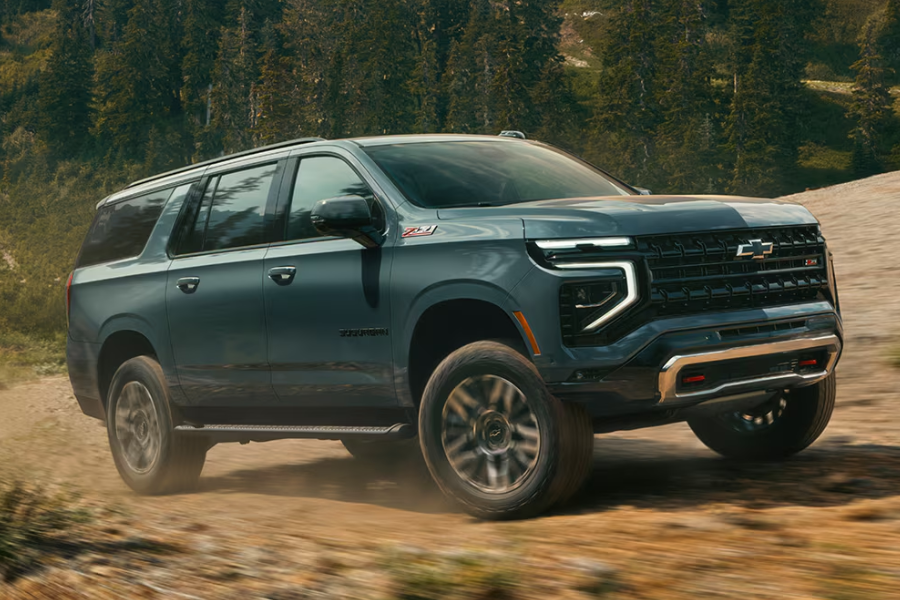
$32,000 Cap + 100% Bonus Depreciation
Browse New Tahoe & Suburban Inventory ?
2026 Chevy Suburban & Tahoe
Both the Suburban and Tahoe exceed 6,000 lbs GVWR. While subject to the $32,000 Section 179 SUV cap, the remaining business-use balance qualifies for 100% first-year bonus depreciation in 2026.
| Chevrolet Model & Configuration | Interior Cargo Bed Length | 2026 Section 179 Treatment (Over 6,000 lbs GVWR) |
|---|---|---|
| Silverado 1500 — Standard Bed | 6'7" (79.4 in.) | No $32,000 Cap Exceeds 6 ft bed requirement |
| Silverado 1500 — Long Bed | 8'2" (98.2 in.) | No $32,000 Cap Exceeds 6 ft bed requirement |
| Silverado 1500 — Short Bed (Crew Cab) | 5'10" (69.9 in.) | $32,000 Cap Applies Under 6 ft (eligible for 100% bonus depreciation on balance) |
| Silverado 2500 HD / 3500 HD (Standard or Long Bed) | 6'10" to 8'2" | No $32,000 Cap Exceeds 6 ft bed requirement |
| Express Cargo Van / Commercial Chassis | Dedicated Cargo Enclosure | No $32,000 Cap Exempt commercial cargo configuration |
| Chevrolet Colorado (All Beds) | 5'2" (61.7 in.) | $32,000 Cap Applies Verify specific trim exceeds 6,000 lbs GVWR |
| Chevrolet Tahoe & Suburban | Enclosed SUV | $32,000 Cap Applies Eligible for 100% bonus depreciation on remaining basis |
*Always verify the exact GVWR on the driver door jamb and interior bed length of the specific VIN you select at Burien Chevrolet before finalizing your purchase.
How Section 179 & 100% Bonus Depreciation Work Together
With 100% bonus depreciation active in 2026, even vehicles subject to the $32,000 Section 179 SUV cap can often be deducted in full during the first year:
- Step 1 — Apply Section 179 First: Deduct up to the full business-use purchase price for uncapped vehicles (like a Standard Bed Silverado 1500 or Silverado HD), or up to $32,000 for capped vehicles (like a Tahoe, Suburban, or Crew Cab Short Bed).
- Step 2 — Apply 100% Bonus Depreciation to the Remainder: Any remaining business-use cost basis above the $32,000 cap can be deducted in year one using 100% bonus depreciation.
- Step 3 — Check Taxable Income Limits: Section 179 cannot exceed your business's net taxable income for the year (unused amounts carry forward), whereas bonus depreciation can create a net operating loss.
Example: A Puget Sound Contractor Buying a Silverado 2500 HD
Suppose a general contractor based in Burien or South Seattle purchases a new Chevrolet Silverado 2500 HD Standard Bed for $68,000 in 2026 and uses it 90% for business across job sites in King County:
- Business-Use Basis: $68,000 × 90% = $61,200
- Section 179 Deduction: Because the Silverado 2500 HD features a bed longer than 6 feet and a GVWR well over 6,000 lbs, there is no $32,000 SUV cap. Assuming sufficient business income, the full $61,200 can be deducted on the 2026 federal return.
- Estimated Federal Tax Savings: At a 24% effective federal tax rate, that deduction yields roughly $14,688 in first-year federal tax savings.
Washington State Tax Note: Because Washington does not levy a personal or corporate state income tax, Section 179 savings apply directly to your federal IRS tax liability. Be sure to ask your Washington CPA how vehicle purchases interact with local sales tax and Washington B&O tax reporting.
Important Business-Use Rules to Keep in Mind
- More Than 50% Business Use Required: You must use the vehicle for qualified business purposes more than 50% of the time in the year you place it in service—and continue exceeding 50% in subsequent years to avoid deduction recapture.
- Keep a Contemporaneous Mileage Log: The IRS requires accurate records logging dates, destinations, business purposes, and mileage. Using a digital mileage-tracking app makes compliance simple.
- Commuting Doesn't Count: Driving from home to a regular office or shop is considered personal commuting, whereas travel between job sites, client meetings, or supply runs (and travel from a qualifying principal home office) counts as business mileage.
- New & Pre-Owned Vehicles Qualify: Section 179 applies to both brand-new and qualifying pre-owned vehicles, provided the vehicle is "new to you" and placed into service before December 31, 2026.

Prices for vehicles as equipped do not include charges such as: License, Title, Registration Fees, State or Local Taxes, Finance Charges, Credit Investigation, Optional Credit Insurance, or Physical Damage or Liability Insurance. But DOES include a negotiable $200 Documentary Services Fee. All photos and graphics for illustration purposes only. Where actual vehicle photos are not available, stock image representations may be displayed. Prototype features or options may be displayed. Dealership makes no representations, expressed or implied, to any actual or prospective purchaser or owner of vehicles as to the existence, ownership, accuracy, description or condition of vehicles' listed equipment, accessories, price or any warranties. Prices may include dealer installed options. Any and all differences must be addressed prior to the sales transaction. The Employee Discount for Everyone is not compatible with Lease offers. See Burien Chevrolet for details.
The Manufacturer's Suggested Retail Price excludes tax, title, license, dealer fees and optional equipment. Dealer sets final price.
More Info
*Prices for vehicles as equipped do not include charges such as: License, Title, Registration Fees, State or Local Taxes, Finance Charges, Credit Investigation, Optional Credit Insurance, or Physical Damage or Liability Insurance. But DOES include a negotiable $200 Documentary Services Fee. All photos and graphics for illustration purposes only. Where actual vehicle photos are not available, stock image representations may be displayed. Prototype features or options may be displayed. Dealership makes no representations, expressed or implied, to any actual or prospective purchaser or owner of vehicles as to the existence, ownership, accuracy, description or condition of vehicles' listed equipment, accessories, price or any warranties. Prices may include dealer installed options. Any and all differences must be addressed prior to the sales transaction. The Employee Discount for Everyone is not compatible with Lease offers. See Burien Chevrolet for details. The Manufacturer's Suggested Retail Price excludes tax, title, license, dealer fees and optional equipment. Dealer sets final price.