






Blog / Community

Reforestation Takes to the Air

drones-scroller02-01

In hard-to-reach places hit by wildfires, the Earth finds a new friend — drones.

This article originally appeared in Chevrolet's online magazine, New Roads.

Having devoted his entire career to environmental sustainability, Grant Canary knew the direction that wildfires were trending was unsustainable. Data showed that wildfires in the U.S. were increasing in number and intensity, and destroying trees faster than new seedlings can be grown by traditional methods.

So Canary set out to give nature a little technological help, founding a company called Mast Reforestation. Mast uses drones to strategically drop seeds in areas devastated by wildfire, pairing that approach with traditional reforestation methods.

The drones used in reforestation are not the hummingbird-like machines you may have seen neighbors flying at the park. They’re more like cargo helicopters.

“These aircraft are 8 feet in diameter, have six rotors, and carry 57 pounds of seed per aircraft,” Canary says.  
 
The drones use LiDAR (a remote sensing method like radar that uses a laser instead of radio waves) to build a three-dimensional map of the scorched terrain. Mast processes that data and selects spots that look promising for planting while avoiding inhospitable areas like gravel roads, blackberry patches, and rocks. 
 
The drones are then programmed with flight patterns and loaded with seeds. One operator pilots three to five pre-programmed drones — Mast calls them drone swarms — that move in concert, planting as they go.  
 
Drones work quickly and can easily reach remote and treacherous areas. “Traditional replanting can cover about one to two acres per day,” Canary says. “Aerial replanting is six times more efficient, depending on the ecosystem.” 

RE-TREES 

A look at some of the tree species Mast plants in its reforestation efforts.

An illustration of a Ponderosa pine tree.

PONDEROSA PINE

An easy way to identify a ponderosa pine is by smelling its bark — it carries the scent of butterscotch or vanilla.

An illustration of a Douglas fir tree.

DOUGLAS FIR

This type of fir is popular to use as Christmas trees and has extremely strong timber that’s good for construction.

An illustration of a red fir tree.

RED FIR

Named for the color the bark becomes as it ages, red firs grow at a high elevation of 4,500–9,000 feet.

An illustration of a white pine tree.

WHITE PINE

A fast grower, with height increases of more than 24 inches per year, white pines reach 50–80 feet.

An illustration of an incense cedar tree.

INCENSE CEDAR

Named for the spicy aroma of the wood, incense cedars can reach ages of 500 years or more.

An illustration of a white fir tree.

WHITE FIR

Another popular Christmas tree choice, white firs can thrive in harsh conditions and grow to 30–50 feet.

SEED VESSELS
Based in Seattle, Mast is one of several sustainability startups using drones to help regrow forests lost to wildfires. Developing the technology to spread seeds was relatively easy. The tricky part was coming up with a way to package the seeds that would allow them to take root and survive.

Mast uses a specially designed mixture of seeds and nutrients wrapped in puck-like packages it calls seed vessels. One of the ingredients is a type of hot pepper that keeps squirrels and other herbivores from eating the potential trees for lunch.

A large building with long rows of shelves that are all filled with bags of seeds.A person stands inside a green-house surrounded by tree seedlings.

In September 2021, to help with the seed side of the business, Mast acquired Silvaseed, a 130-year-old seeding supply company. Canary says his company has expanded Silvaseed “to become the largest private seed bank west of Colorado.” 
 
Funding for reforestation projects comes from an array of sources, one of which is forestry and mining companies that are required to replant trees. Another funding tactic Mast uses is leveraging forward-looking carbon removal credits. Companies looking to reduce their future emissions help fund today’s reforestation projects. 

Canary points out that Mast uses aerial reseeding alongside traditional planting methods. “The two methods are used together to increase rates of success,” he says. 
 
While it’s not yet clear precisely how effective drone reforestation will ultimately be, any help will be a step in the right direction.  
 
“For a long time, I was intrigued by technologies that could remove carbon from the atmosphere and reduce carbon dioxide,” says Canary, whose résumé includes work with the U.S. Green Building Council and wind energy projects in China, Denmark, and the United States. “I came to the realization that the best technology is trees themselves, and they are the only currently viable method that is scalable and cost-effective.”

Posted in:

Related Posts

2026-Cup-Car

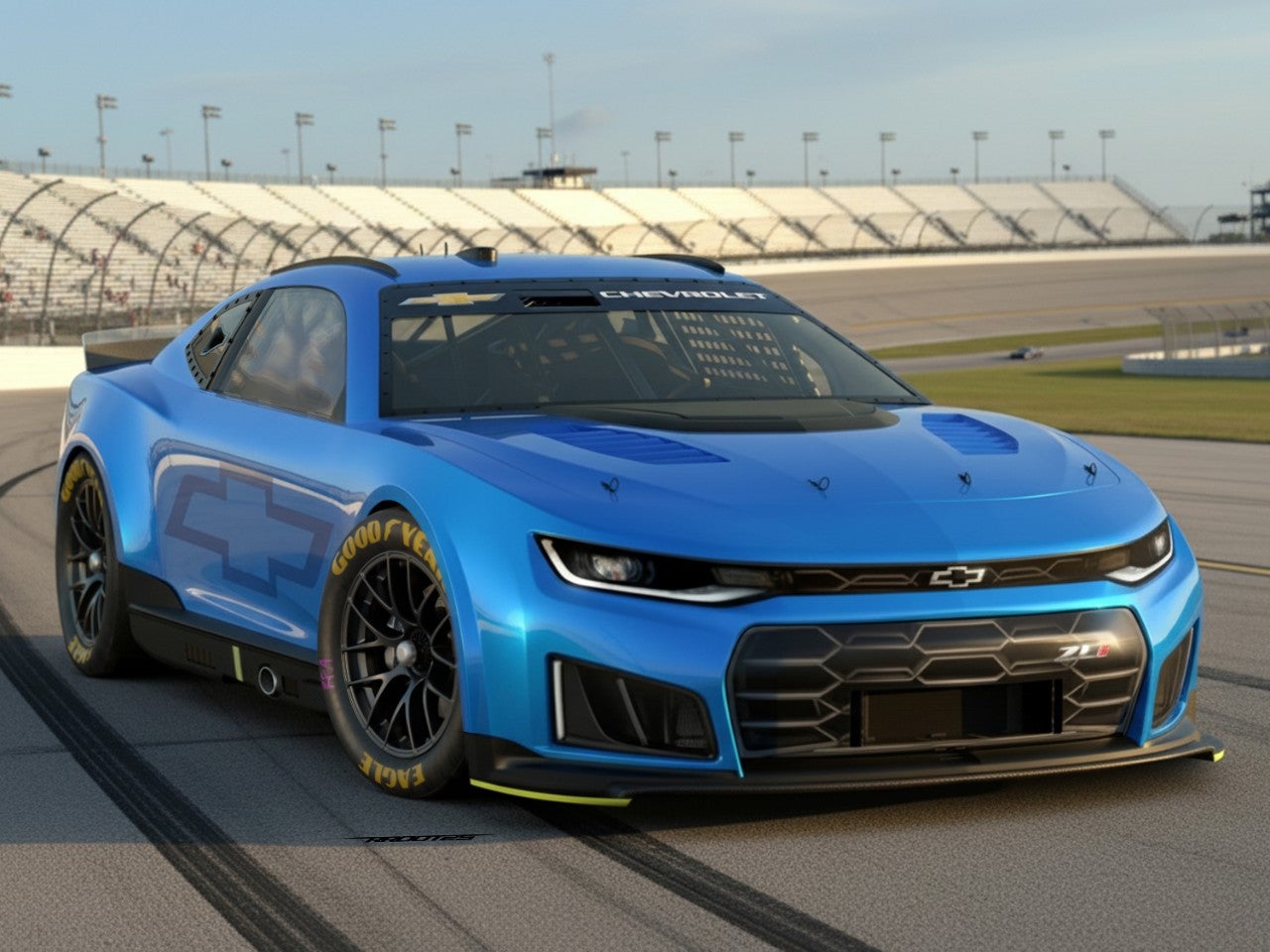
Chevrolet Camaro ZL1 Race Car Set to Debut New Look for 2026 NASCAR Cup Series Season

Chevrolet will hit the track for the 2026 NASCAR Cup Series season sporting an updated design of its Camaro ZL1 racecar, with its competition debut set to come in February at the Cook Out Clash at Bowman Gray. The latest edition Camaro ZL1 racecar will feature upgraded styling that is aligned with Chevrolet’s recently released Camaro ZL1 Carbon Performance Package accessories kit for owners to optimize the performance capabilities of the sixth-generation Camaro ZL1 production car. Chevrolet collaborated with NASCAR and its teams on this update. The most prominent racecar changes are a larger hood power dome, a revised front grille, and more pronounced rocker panels along the sides of the car. These mirror the new Carbon Performance Package's carbon-fiber hood insert and rockers, plus ZL1 1LE-spec front grille and splitter. Dating back to 1955, Chevrolet has competed with 14 different nameplates in the NASCAR Cup Series – recording 881 all-time victories, 34 Driver Championships, and 44 Manufacturer Championships, including the past five Manufacturer titles, to earn the title as the winningest manufacturer in the series’ history.

GM + ChargePoint 1

ChargePoint and General Motors Collaborate to Install Up to 500 Electric Vehicle Fast Charging Ports

Chargers to feature class-leading charging speeds and showcase ChargePoint’s Omni Port connector system for compatibility with current and future EVs Today,ChargePoint (NYSE: CHPT), a leading provider of networked charging solutions for electric vehicles (EVs), and General Motors (GM) announced plans to further accelerate EV infrastructure growth in the U.S. The companies are joining efforts to install up to 500 ultra-fast charging ports at strategic locations across the U.S., featuring the latest innovations in EV charging to improve access to chargers and help drivers get back on the road faster than ever. ChargePoint and GM intend for the locations to be opened and available to the public before the end of 2025. Branded GM Energy, many applicable locations will be equipped with ChargePoint’s revolutionary Omni Port system. Omni Port allows vehicles with CCS or NACS charging ports to seamlessly charge at any charger, without the need to carry an adapter or dedicate a parking space to a particular connector type. Many of the charging stations planned for the collaboration will feature ultra-fast charging through ChargePoint’s Express Plus platform, which is capable of charging speeds up to 500kW. “The transition to electric mobility continues to be driven by leaders such as General Motors offering innovative EVs and committing to make chargers as ubiquitous as possible,” said Rick Wilmer, CEO of ChargePoint. “Our collaboration with GM represents a significant investment in the infrastructure to enable fast and easy charging for all. Together, ChargePoint and GM will deliver a seamless fast charging experience via reliable charging hardware managed by our industry leading software platform.” “Continuing to provide customers with better charging options helps to remove barriers to EV adoption and improve the ownership experience. Today, GM drivers have access to hundreds of thousands of places to charge and we are proud that this collaboration with ChargePoint adds even more reliable, accessible and convenient charging experiences,” said Wade Sheffer, GM Energy vice president. “With ultra-fast charging, Omni Port technology, and excellent customer experiences, this collaboration should be another reason why EV drivers and the EV-curious should be excited.” Through the collaboration, ChargePoint and GM are accelerating the deployment of DC fast charging across the U.S. through an incentive program designed to make it easier for third-party charge point operators (CPOs) to own and operate EV charging infrastructure. For more information, please visit: www.chargepoint.com. For more information about GM Energy, please visit: www.gmenergy.gm.com.

gbs

Walmart deploys Chevrolet BrightDrop vans for InHome delivery service

Chevrolet BrightDrop 400 electric vans are hitting the road in major U.S. markets this year to support Walmart’s InHome delivery service. The addition of BrightDrop vans to the Walmart last-mile fleet will support growth of the retailer’s InHome delivery service, help reduce carbon emissions, and provide drivers with safe, efficient, and comfortable vehicles. Walmart InHome associates, who are trained to deliver groceries directly into customers’ homes, participated in a pilot with GM to assess the overall performance of the BrightDrop 400 in live operation scenarios, including city driving and customer deliveries. Associates were impressed with BrightDrop's 360-degree HD Surround Vision camera and blind-zone steering assist, battery range and reliability, and maneuverability. Here are some key takeaways they shared from the pilot: The vans easily navigated congested roads and dense neighborhoods. Automation features such as auto-closing doors boosted efficiency and improved the associate experience. The low-step ergonomic design allowed easy entrance and exit of the vehicles, allowing for swift and efficient last-mile deliveries. "Our BrightDrop vans are purpose-built to get the job done safely and efficiently while helping businesses like Walmart decarbonize their fleet," said Sandor Piszar, vice president, GM Envolve. "The pilot program demonstrates that at the forefront of our design are  the hard-working drivers that deliver goods and services to customers every day." Walmart, which today announced the expansion of its InHome delivery program to 62 million households nationwide, will roll out the BrightDrop 400 vans  in Austin, Dallas, Denver, Detroit, northwest Arkansas, Orlando, and the San Francisco Bay area by the end of the year. “With a focus on being people-led and tech-powered, we're always looking for ways to enhance the associate experience and provide the best possible service to our customers. That's why we're so excited about the addition of the BrightDrop 400 to our InHome delivery fleet,” said Warren Moore, vice president, Dedicated Delivery, Walmart U.S. “During the pilot, we listened closely to our InHome associates’ feedback and were impressed by the vans' performance in real-world scenarios.” BrightDrop electric vans, produced at the CAMI Assembly plant, are equipped with advanced safety features to help ensure driver alertness and safety, low step-in height to ease driver ingress and egress and large infotainment screens for a tech-enabled driving experience. For more information about the Chevrolet BrightDrop electric van mobility solutions, please visit: https://www.gmenvolve.com/fleet/electric-vehicles/chevrolet-brightdrop