





Chevrolet Introduces First Hardtop Corvette Convertible

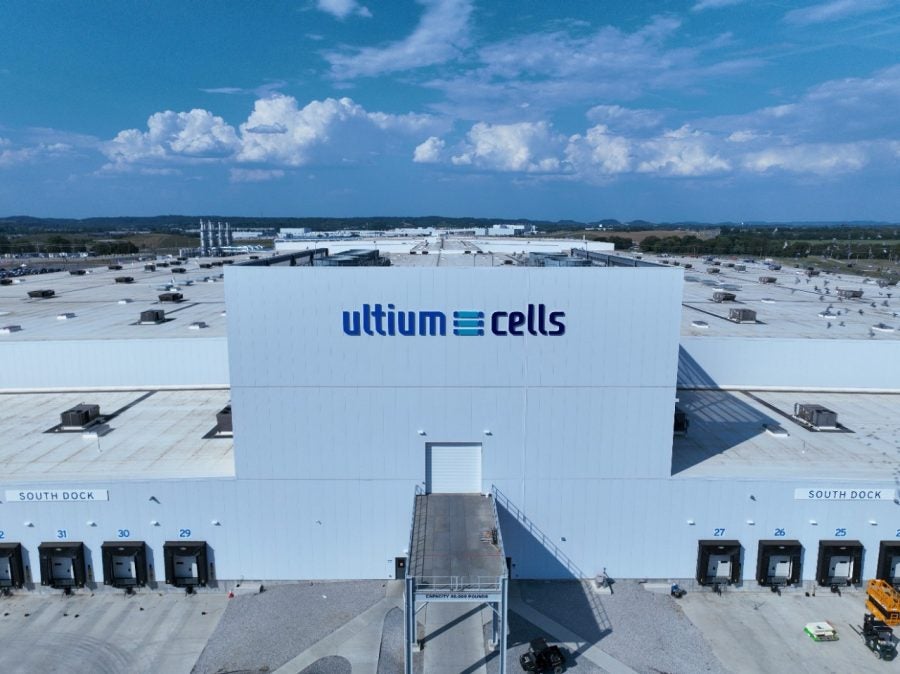
GM continues to innovate in order to create the best American-made EV vehicles Ultium Cells LLC, a joint venture between General Motors and LG Energy Solution, will upgrade its Spring Hill, Tennessee battery cell manufacturing facility to scale production of low-cost lithium iron phosphate battery cells, building on a $2.3 billion investment announced in 2021. Conversion of battery cell lines at Spring Hill to produce LFP cells will begin later this year, with commercial production expected by late 2027. “At GM, we’re innovating battery technology to deliver the best mix of range, performance, and affordability to our EV customers,” said Kurt Kelty, VP of batteries, propulsion, and sustainability at GM. “This upgrade at Spring Hill will enable us to scale production of lower-cost LFP cell technologies in the U.S., complementing our high-nickel and future lithium manganese rich solutions and further diversifying our growing EV portfolio." GM’s flexible EV platform has been architected to enable the quick integration of multiple cell chemistries and form factors. The Ultium Cells plant in Warren, Ohio will continue producing cells with nickel cobalt manganese aluminum chemistry, which has been key to GM delivering a range of crossovers with more than 300 miles of range on a charge. With LFP battery technology, GM is targeting significant battery pack cost savings compared to today’s high-nickel battery pack while increasing consumer EV choice. “The upgrade reflects the continued strength of our partnership with General Motors and our shared commitment to advancing EV battery innovation,” said Wonjoon Suh, executive VP and head of the Advanced Automotive Battery division at LG Energy Solution. “We will bring our extensive experience and expertise in U.S. manufacturing to the joint venture facility, further accelerating our efforts to deliver new chemistries and form factors that effectively capture the unmet needs in the EV market.” The Spring Hill facility currently employs about 1,300 people. With the ability to manufacture battery cells in multiple cell chemistries, Spring Hill will help drive U.S. battery innovation, manufacturing, and consumer choice in the EV market. “Ultium Cells’ additional investment and commitment to innovating and enhancing its Spring Hill operations is a testament to the state’s longstanding, cohesive partnerships, which started with General Motors, and grew to include LG Energy Solution in 2021, and we stand ready to continue supporting these companies and their joint venture for years to come,” said Stuart C. McWhorter, commissioner of the Tennessee Department of Economic and Community Development. “We are grateful for the continued partnership and support we've received from the State of Tennessee as we continue to advance our lead in EV battery cell manufacturing,” said Kee Eun, President and CEO of Ultium Cells. “This investment expands our capabilities beyond a single battery cell chemistry, allowing us to produce new chemistries alongside our existing cells. Expanding our product portfolio ensures Ultium Cells will remain at the forefront of battery cell innovation and sustain our commitment to be a stable, long-term employer for the communities we serve.”
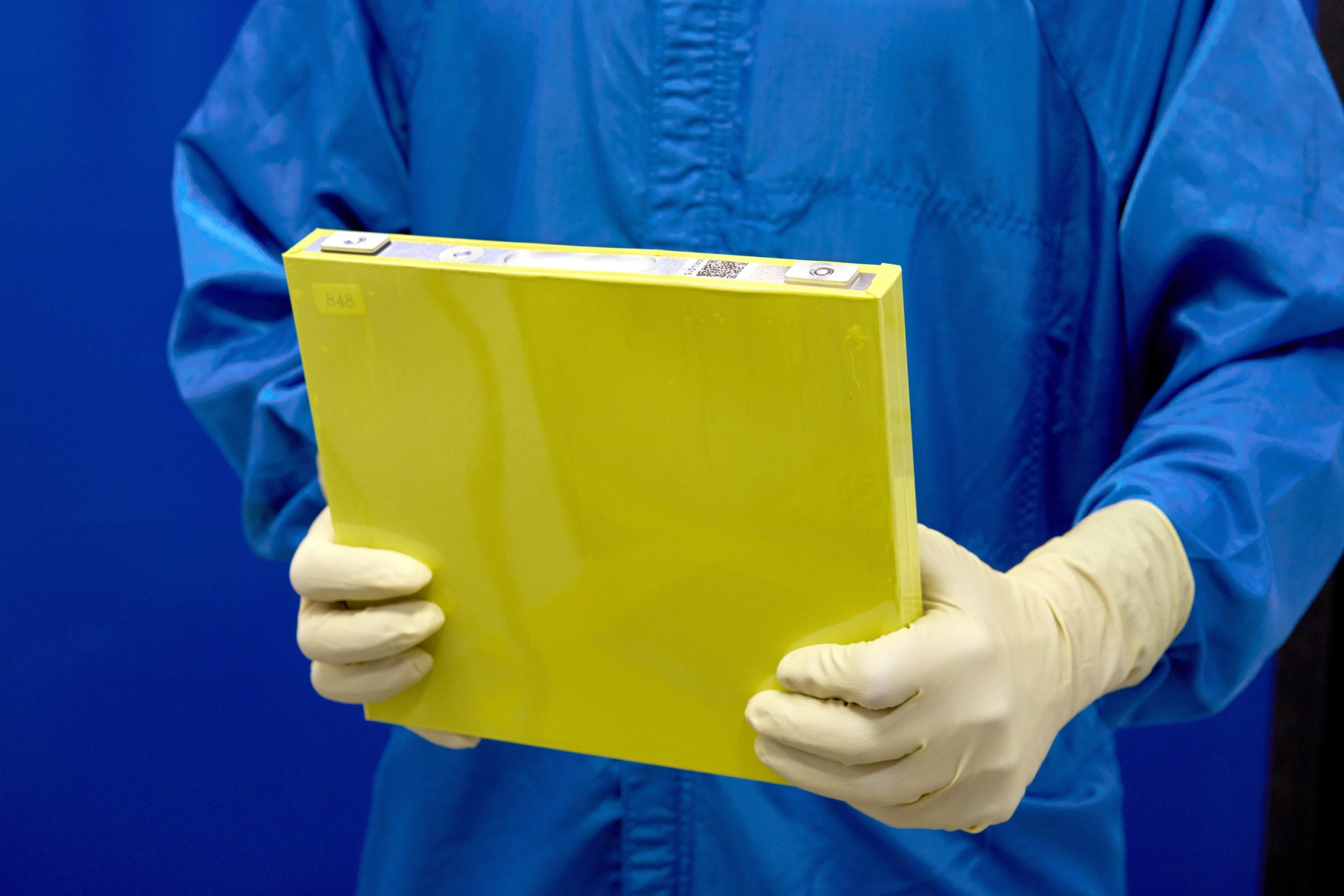
General Motors and LG Energy Solution will commercialize lithium manganese-rich (LMR) prismatic battery cells for future GM electric trucks and full-size SUVs, in a new battery technology breakthrough. This builds on a partnership between the two companies to develop prismatic battery cell technology and related chemistries, and on GM’s long legacy of American ingenuity that’s produced innovations like the small-block V8 engine, OnStar connected vehicle services and hands-free Super Cruise. GM aims to become the first automaker to deploy LMR batteries in EVs. Ultium Cells, a GM and LG Energy Solution joint venture, plans to start commercial production of LMR prismatic cells in the United States by 2028, with pre-production expected to begin at an LG Energy Solution facility by late 2027. The final production-design of these LMR battery cells will be validated at GM’s Battery Cell Development Center in Warren, MI, which is expected to open earlier that year, as well as LG Energy Solution’s facility. Battery cathodes require materials like cobalt, nickel and manganese, with cobalt being the most expensive. LMR battery cells use a higher proportion of more affordable manganese, while also delivering greater capacity and energy density. Battery engineers at GM and LG Energy Solution have developed a new LMR prismatic battery cell that unlocks 33% higher energy density compared to the best-performing lithium iron phosphate (LFP) based cells – at a comparable cost. General Motors battery technician Steven Petty Jr. focuses on aligning electrodes on an anode sample for a prototype LMR battery cell in the making. (Photo by Steve Fecht for General Motors) GM's electric truck platform has segment-leading range using high-nickel chemistry today. By integrating LMR battery technology and the manufacturing and space efficiency benefits of prismatic cells, GM aims to offer more than 400 miles of range in an electric truck while achieving significant battery pack cost savings compared to today’s high-nickel pack. “We’re pioneering manganese-rich battery technology to unlock premium range and performance at an affordable cost, especially in electric trucks,” said Kurt Kelty, VP of battery, propulsion, and sustainability at GM. “As we look to engineer the ideal battery for each vehicle in our diverse EV portfolio, LMR will complement our high-nickel and iron-phosphate solutions to expand customer choice in the truck and full-size SUV markets, advance American battery innovation, and create jobs well into the future.” “We’re excited to introduce the first-ever LMR prismatic cells for EVs, the culmination of our decades-long research and investment in the technology,” said Wonjoon Suh, executive VP and head of the Advanced Automotive Battery division at LG Energy Solution. “GM’s future trucks powered by this new chemistry are a strong example of our shared commitment to offering diverse EV options to consumers.” GM began researching manganese-rich lithium-ion battery cells in 2015, accelerating this technology development by prototyping LMR cells at its Wallace Battery Cell Innovation Center in Warren. In collaboration with partners, GM engineers advanced cathode materials, electrolytes, additives, form factors, and cell assembly processes to overcome LMR’s legacy challenges in performance and durability. LG Energy Solution holds the largest LMR technology IP portfolio globally, having secured over 200 patents 1 in this technology field. Its expertise reflects extensive research, with its first patent on LMR chemistry dating back to 2010. LMR battery technology integrates into GM’s battery supply chain and cell manufacturing processes, reinforcing strategic investments in domestic battery production and the responsible sourcing of critical materials like lithium, graphite, and manganese from North America.
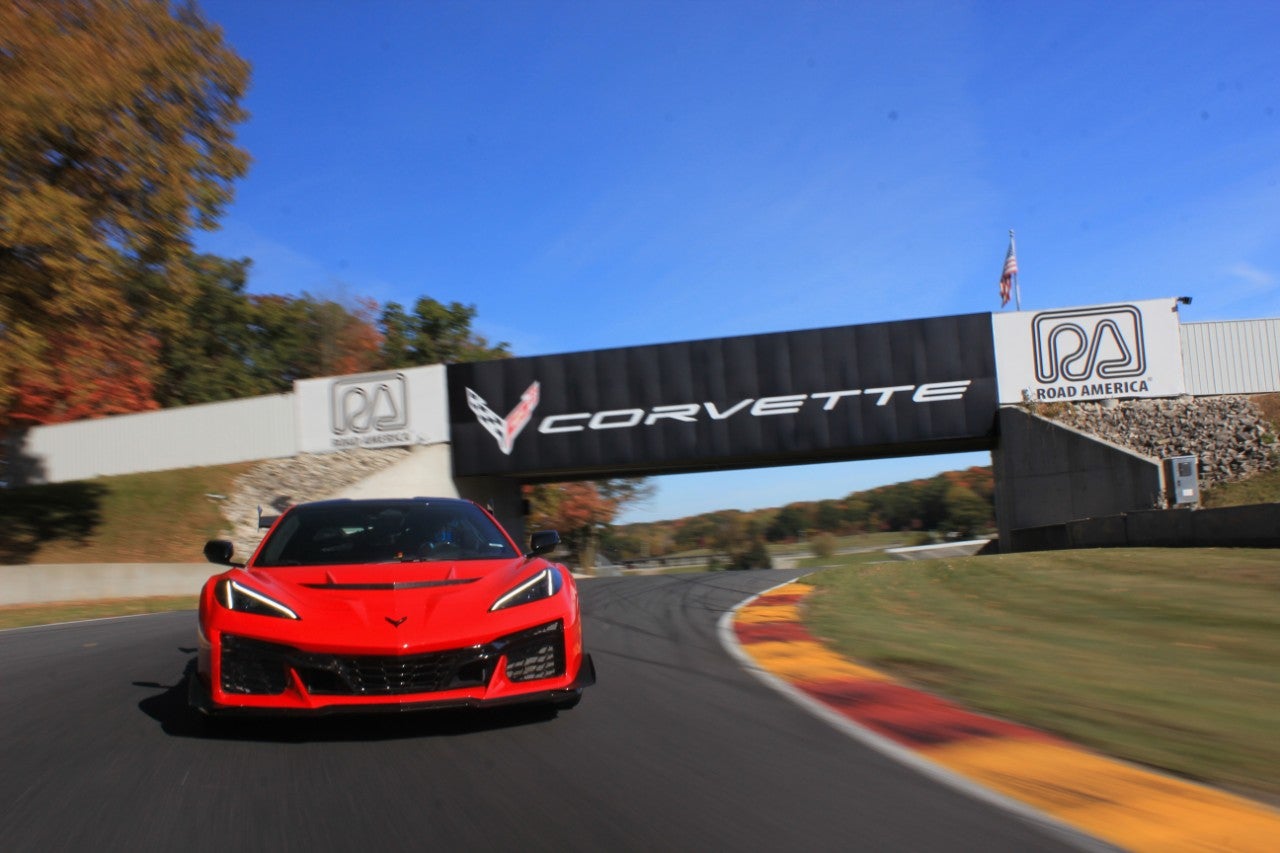
The Corvette ZR1 and the team behind it continue to put the performance car world on notice. With four different General Motors drivers behind the wheel, the Corvette ZR1 has set not one, but five new production car lap records during a U.S. track tour. Below are the five tracks and the Corvette ZR1’s lap times, each with a GM driver at the wheel: Watkins Glen Long Course: 1:52.7. Driver: Bill Wise, Lead Performance Engineer, Chassis Controls. Road America: 2:08.6. Driver: Brian Wallace, Lead Vehicle Dynamics Engineer. Road Atlanta: 1:22.8. Driver: Chris Barber, Lead Development Engineer. Virginia International Raceway Full Course: 1:47.7. Driver: Aaron Link, Global Vehicle Performance Manager. Virginia International Raceway Grand Course: 2:32.3. Driver: Aaron Link. The drivers set out on this track tour with a pre-production Corvette ZR1 equipped with the optional ZTK Performance Package. The ZTK Package notably adds an aggressive, high-downforce rear wing, front dive planes, and a tall hood Gurney lip – all constructed from woven carbon fiber. Underneath, underbody strakes replace the standard front underwing stall Gurney to substantially increase front downforce. The suspension tuning included in the ZTK package incorporates stiffer springs and adds Michelin Pilot Sport Cup 2R ZP tires. With four different individuals behind the wheel of the Corvette ZR1, each with a different driving style, these lap times showcase the engineering prowess of the car. Future customers don’t need to be professional drivers to extract the ultimate performance of the 1,064-horsepower Corvette ZR1. The drivers, with a combined 65 years of GM Level 6 driving experience, each brought racing and high-performance driving experience when joining General Motors. Individually, each driver quickly reached the top of GM’s driver certification program, and all achieved Nürburgring Industry Pool certification. This group was entrusted with pushing the Corvette ZR1 to its absolute limits on the highest speed, highest commitment tracks in the U.S. “Corvette ZR1 continues to showcase how this nameplate elevates at every corner,” Corvette executive chief engineer Tony Roma said. “From design, engineering, development, validation, to driving and setting incredible lap records like these – we do it all in house.” Corvette ZR1 with the ZTK Package boasts a top speed of 233 mph on the racetrack, 0-60 mph time of 2.3 seconds, and quarter-mile time of 9.6 seconds. With these figures, no current production car under $1 million rivals Corvette ZR1. MSRPs for the Corvette ZR1 start at $174,995 (including $1,695 DFC) for the 1LZ coupe and $184,995 (including DFC) for the 1LZ hardtop convertible. Production is scheduled to begin at General Motors’ Bowling Green Assembly plant in Kentucky in the second quarter of 2025, and Chevrolet will begin accepting orders for the 2025 Corvette ZR1 later this month.